Customer journey automation: How to automate every stage of the lifecycle
Published on May 27, 2026/Last edited on May 27, 2026/13 min read

Team Braze
Contents
Customer journey automation connects behavioral data to messaging logic. It takes you from automating one or two points of interaction, like onboarding or delivery information and plots the entire customer journey, so you can respond at the right moment, exactly when it’s relevant.
But getting started with this level of automation means understanding all customer touchpoints, as well as the platforms available and the types of journeys you can automate.
Here, we’ll look at all these things and more, to help you build automation into every stage of the lifecycle and reap the benefits.
TL;DR
- Customer journey automation uses behavioral data to trigger personalized messages automatically at every stage of the lifecycle, removing the need for manual intervention at each step
- A five-step framework covers the foundations, from journey mapping and behavioral triggers through to cross-channel coordination and continuous testing
- Seven journey types serve different moments in the customer relationship, from onboarding and re-engagement through to VIP and promotional sequences
- AI-driven customer journeys adapt based on individual behavioral history, determining the most relevant next action in real time
- Platform choice determines how much of the automation strategy can be owned by the marketing team and how much relies on engineering to build and maintain
- Measuring automation at the journey level, broken down by segment, generates the signals needed to keep improving
Key takeaways
- Journey mapping is the prerequisite for everything else. Without a clear picture of what the journey looks like, behavioral triggers have no logic to execute
- Behavioral triggers should cover both actions and inactions. A customer who doesn't log in for seven days is as important a signal as one who completes a purchase
- Opt-out rates are an early warning system. A spike tends to appear before engagement and conversion numbers start to fall, making them worth monitoring closely
- Treating automation like a product, with regular review cycles and incremental refinement, produces better results than treating it as a one-time build
- A platform that batches data processes what happened yesterday. For journeys built on behavioral triggers, that's too late
What is customer journey automation?
Customer journey automation is the practice of using software and behavioral data to guide customers through a sequence of personalized interactions automatically, without requiring manual intervention at each step. The system responds to what a customer does, or doesn't do, and sends the appropriate message at the appropriate moment.
Where a traditional campaign might send the same email to an entire list on a Tuesday morning, an automated journey sends a welcome message to a new subscriber the moment they sign up, a reminder two days later if they haven't completed a key action, and a different message entirely if they have. Every branch in the journey is defined by logic, and every message is triggered by behavior.
Brands that invest in automated journeys see stronger customer loyalty, higher retention rates, less friction in the customer experience, and a more efficient marketing operation overall. This is most pronounced when automation is matched to the customer lifecycle. It creates the structure for each stage to have its own logic, its own timing, and its own messaging, so the experience a customer receives reflects where they are in the relationship.
Core benefits of customer journey marketing automation
Most marketing teams come to journey automation looking for operational savings, but the impact on customer relationships is also a huge plus.
1. Lower operational costs
Automated journeys cut the volume of manual campaign management significantly. The logic gets set once and the platform handles execution from there. Instead of building individual sends for every segment and moment, teams get time back for strategy, testing, and creative work.
2. More efficient marketing
With automation, messages go out when a customer's behavior says they're ready. A well-timed message to an engaged customer consistently outperforms a carefully crafted one sent at the wrong moment.
3. Better customer experiences
Customers who receive communications that feel relevant to where they are build a different kind of relationship with a brand. Less noise, more signal, and noticeably less friction across the experience.
4. More customers stay with customer retention automation
Customer retention automation takes the manual work out of keeping customers engaged. Automated journeys respond to early behavioral signals before activity drops, removing the need for anyone to manually notice the warning signs.
How customer journey automation works
To build a system that responds to real customer behavior at every stage of the lifecycle follow this framework:
Start with journey mapping
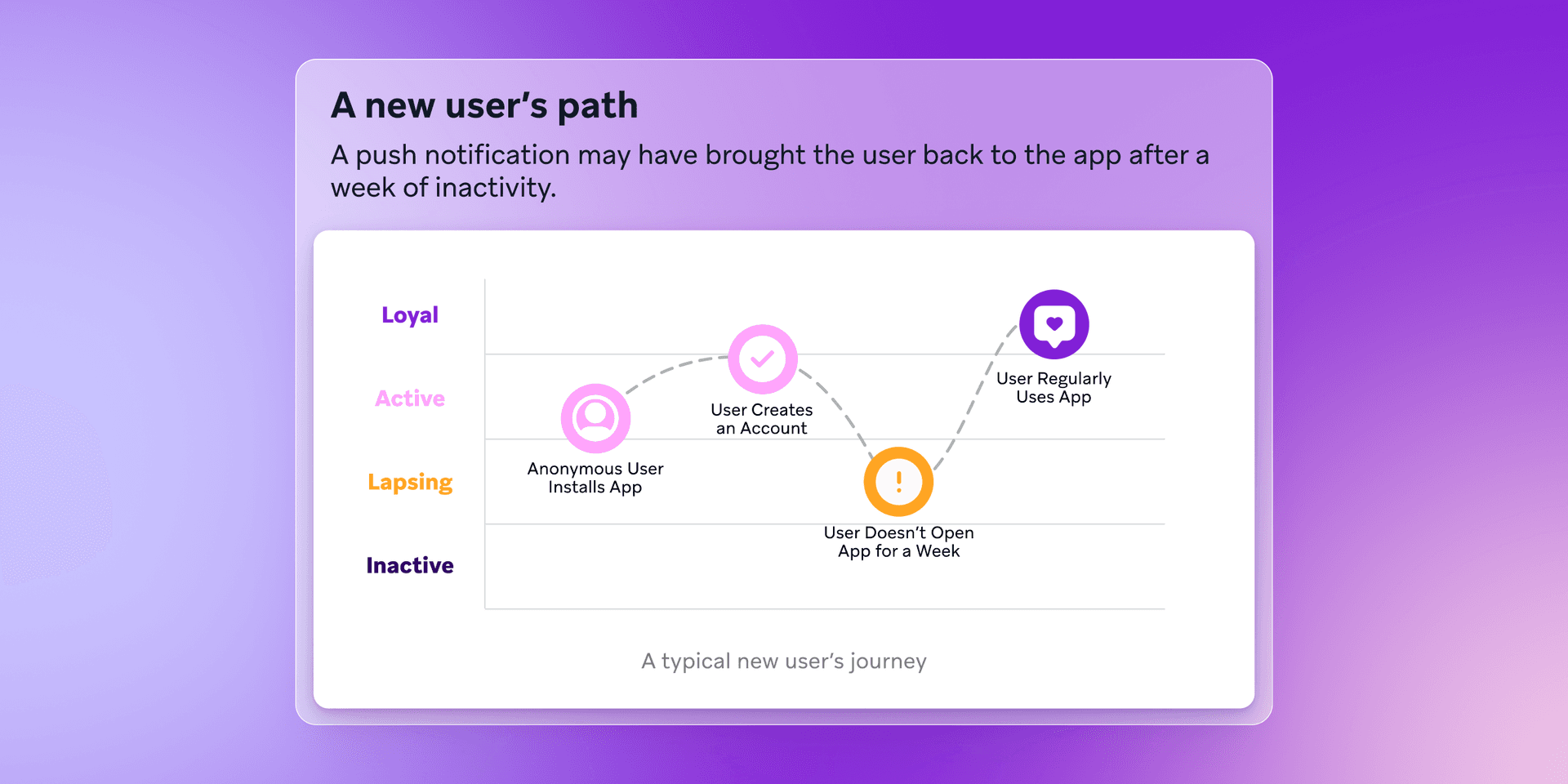
Journey mapping is the process of plotting every point where a customer interacts with your brand, from first awareness through to repeat purchase and beyond. Before any automation runs, someone has to define what the journey actually looks like.
A good map covers the expected path and the alternatives. If a customer opens an email, they move one way. If they don't, they move another. If they complete a purchase, the next step changes entirely. Journey mapping translates customer behavior into the decision logic the platform can execute.
Set your behavioral triggers
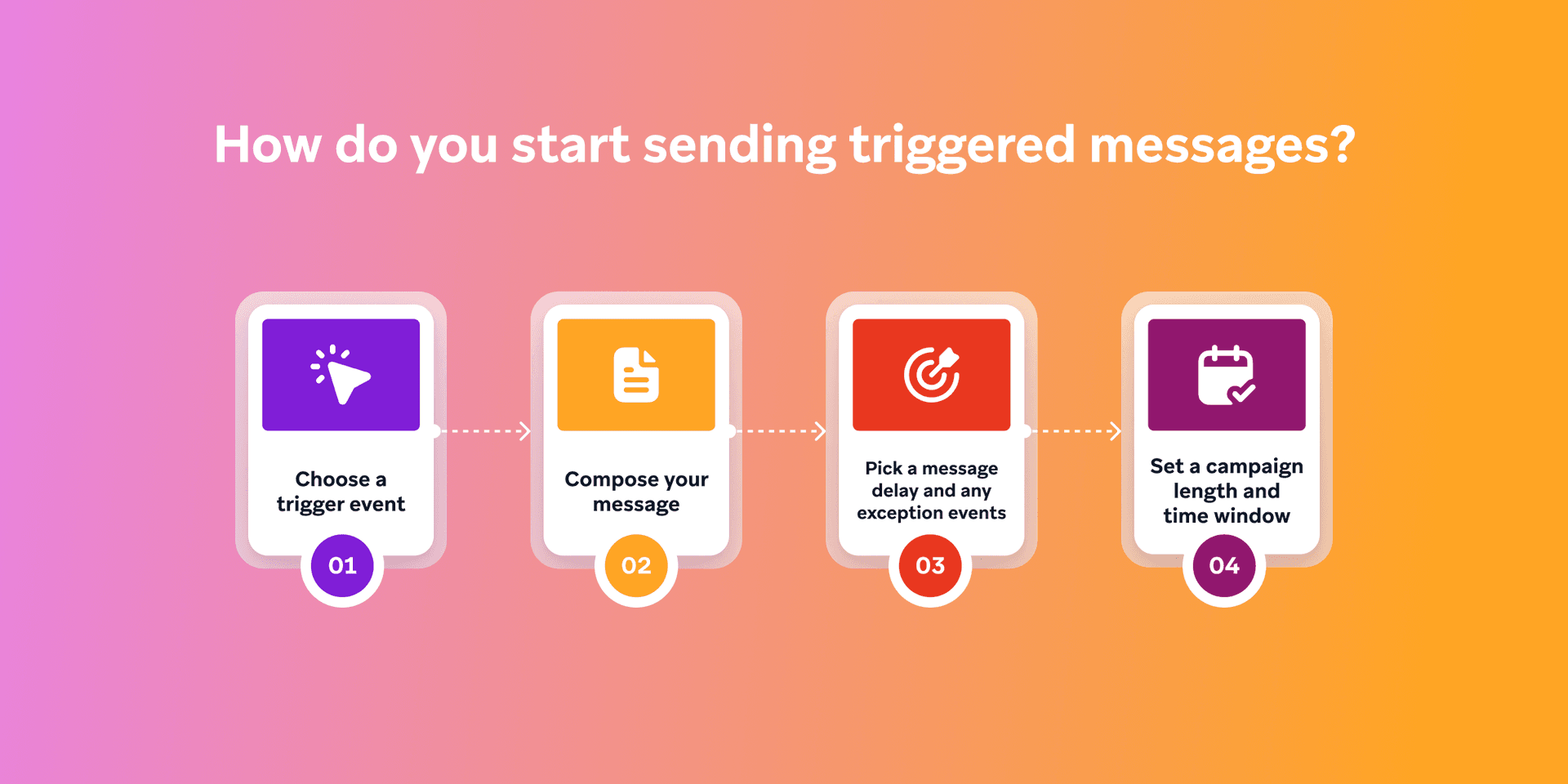
Behavioral triggers are the events that tell the automation when to act. A customer completes a purchase → a confirmation goes out. A customer doesn't log in for seven days → a re-engagement message goes out instead.
Triggers can be actions (clicking a link, making a purchase, completing a step) or inactions (going quiet, not responding to the first message).
Build in real-time personalization
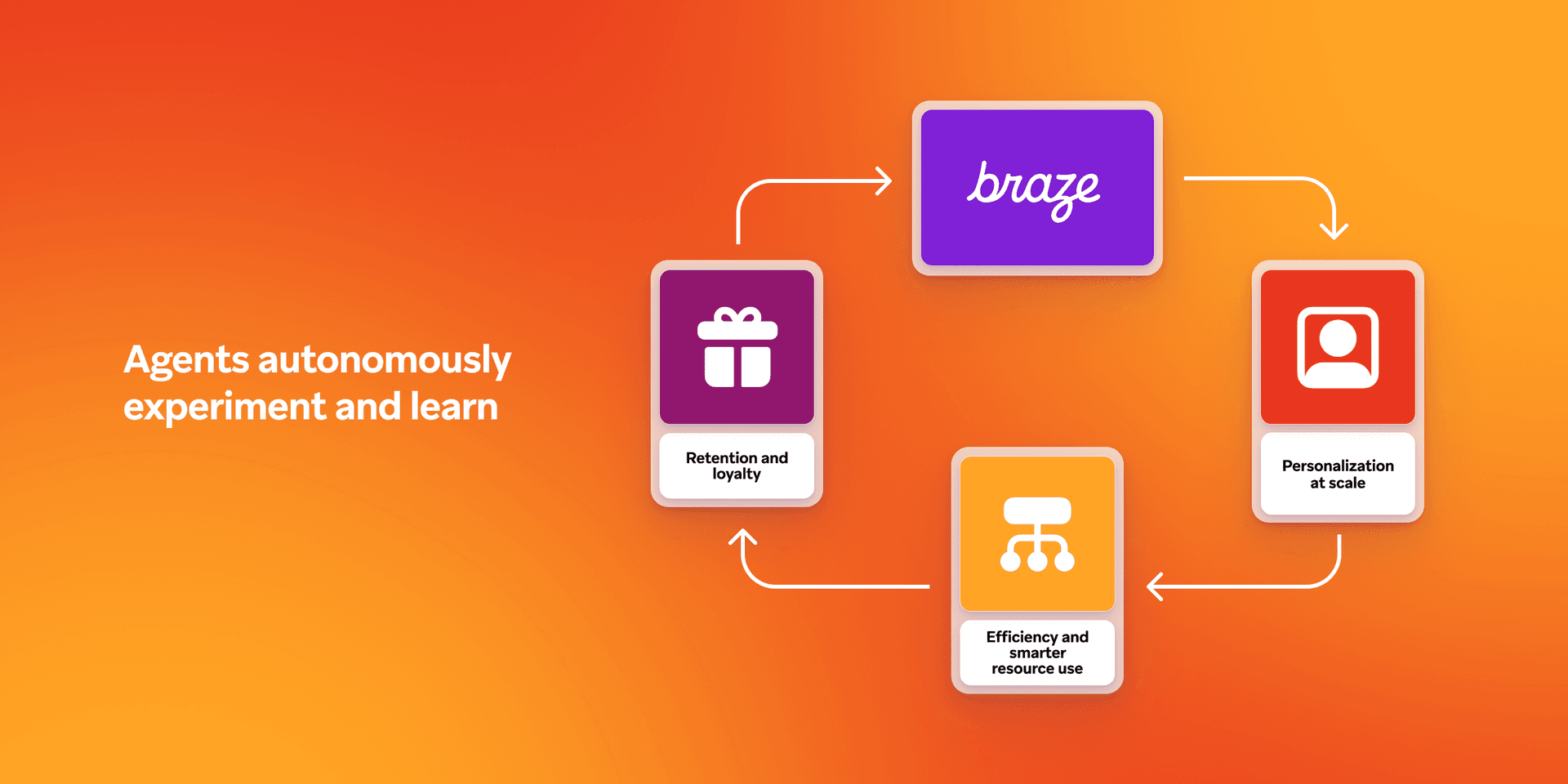
Real-time personalization means tailoring message content, timing, and channel to each customer based on their most current data. As their behavior evolves, their messages do too.
AI plays a growing role here. Rather than manually defined rules for every scenario, AI-driven systems read behavioral signals continuously and adjust accordingly. Combined with cross-channel orchestration, the same personalization logic applies whether the customer receives an email, a push notification, or an in-app message.
Coordinate messaging across every channel
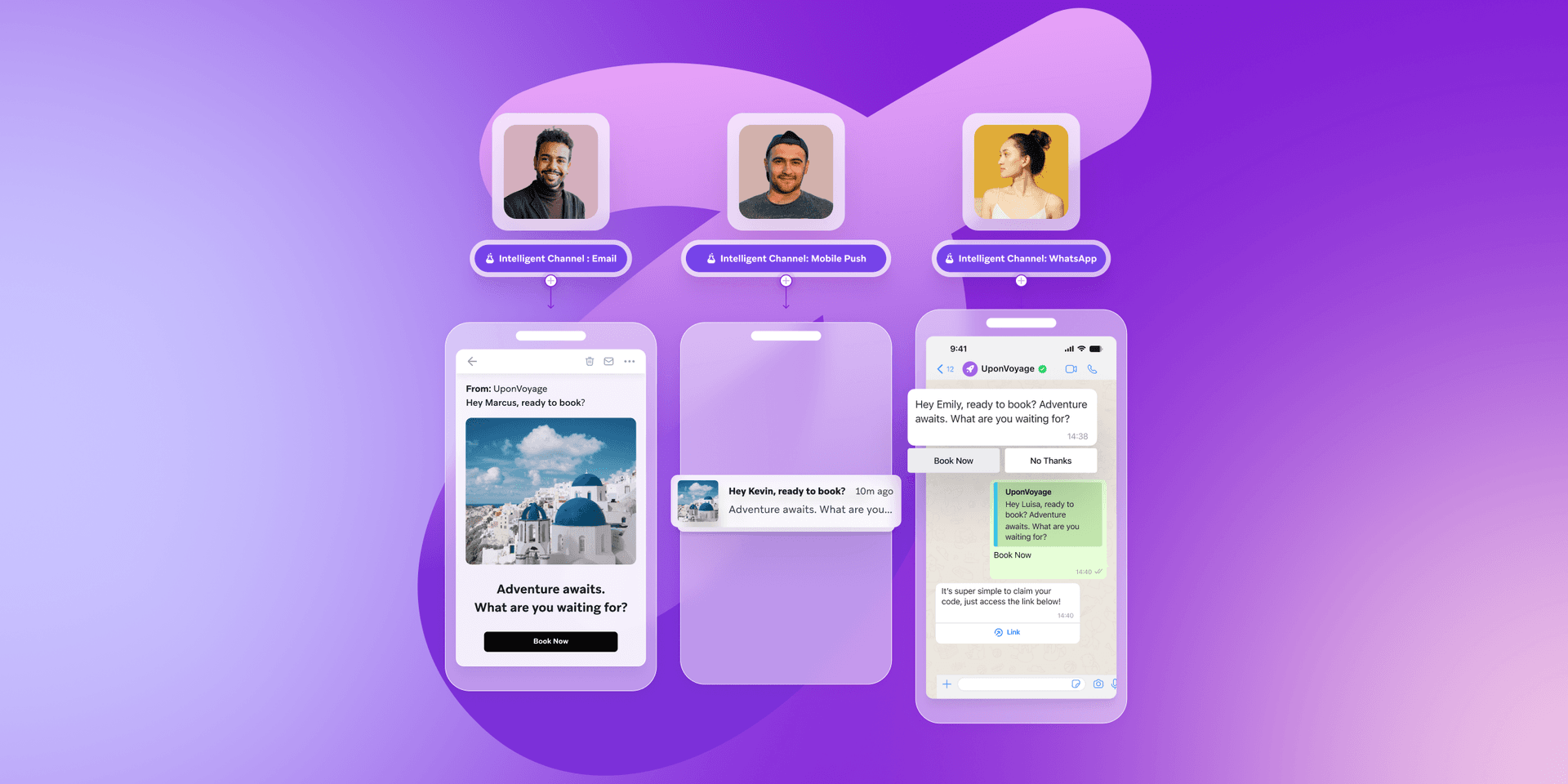
Coordinating messaging across channels means making sure every communication a customer receives works together, regardless of which platform it arrives on. Consistent in tone, sensibly sequenced, and no doubling up when a customer has already responded.
If a customer responds to an email, the SMS follow-up scheduled for the same day shouldn't still go out. If they're more active on push, the journey should adapt to reach them there. Without coordination, customers end up with volume instead of coherence.
Test, measure, and optimize
No automated journey should be set and left to run indefinitely. Testing different message variants, timing adjustments, and channel combinations reveals what's working and what needs attention.
A/B testing individual elements, from subject lines to send times to CTA copy, provides data on what resonates with each segment. Journey completion rates, drop-off points, and engagement at each step all feed back into the logic, making the automation sharper over time.
With the framework mapped out, the next question is how to build these steps into a working system.
How to automate the customer journey
Automating the customer journey involves 5 steps. Each one takes the framework and applies it practically to a campaign.
Step 1: auto-segment audiences by behavior, lifecycle stage, and preferences
Automated segmentation groups customers continuously based on real behavior. That means pages they visit, purchases they make, emails they open, and how recently they've engaged.
Step 2: build personalized customer journeys that adjust in real time
A personalized customer journey branches at every step based on what each customer does. A customer who completes the first onboarding task gets one message. One who skips it gets another. One who converts within 48 hours moves into a different track entirely.
Build those branches in from the start.
Step 3: keep testing and optimizing journey paths
No journey is right on the first build. The data from how customers move through each step, where they drop off, and which messages they respond to is the most direct feedback available on what to improve.
Test one variable at a time and build in regular review points. The improvement compounds with every iteration.
Step 4: automate the next best action with AI-driven customer journeys
With AI-driven customer journeys, the next action is determined by everything known about an individual customer. The system chooses the most relevant response without a human having to make that call each time.
Predictive engagement tools add another dimension. They identify which customers are most likely to convert, lapse, or respond to a specific offer before those events happen, so the journey responds before the moment passes.
Step 5: auto-schedule messages to maximize engagement
With manual scheduling, someone has to pick a send time for every campaign. Auto-scheduling replaces that with data. The system looks at each customer's past engagement patterns and sends at the moment they're most likely to open.
Best platforms for customer journey automation
The platform a team chooses shapes what the automation strategy can realistically look like. It determines how quickly journeys can be built and adapted, and how much of that work stays with the marketing team.
Multi-channel automation and the capabilities that matter
Multi-channel automation requires a platform that can coordinate messaging across channels and process customer data as it arrives. For journeys built around behavioral triggers, slow data processing means messages arrive late, and a delayed message rarely drives the same response as a timely one.
MoEngage is an AI-powered customer engagement platform focused on real-time engagement for mobile and digital-first consumer brands. It covers push notifications, email, in-app messaging, and SMS, and is typically used by teams looking for a dedicated engagement layer with AI-driven personalization capabilities.
Lucidchart is a visual diagramming and collaboration tool. Teams use it to map and document customer journeys during the planning stage, before automation is built. It serves a clear purpose in the conceptual and alignment phases of journey design.
Sprinklr is an enterprise customer experience platform covering marketing and customer care operations at scale. It suits large organizations that need to coordinate customer interactions and brand activity across multiple teams from a unified system.
Braze is a customer engagement platform built for cross-channel lifecycle automation with real-time data processing and AI-powered decisioning. It's well-suited to teams that need journey automation across email, push, SMS, in-app, and other channels without committing to a single vendor's broader data or application ecosystem.
7 types of customer journeys you can automate
Each of these seven types is built for a different moment in the customer relationship and designed to drive a different outcome. Here's how they break down.
Journey type | Trigger | Best for | Primary outcome |
|---|---|---|---|
The next-steps journey | Sign-up or first purchase | New customers | Onboarding completion and early retention |
Reminder journey | Incomplete action within a set window | Customers who started and didn't finish | Conversion recovery |
Birthday and milestone offers | Significant personal date | All customers at milestone moments | Recognition and brand affinity |
VIP journey | High-value behavioral signals | Top purchasers and loyal subscribers | Long-term loyalty and lifetime value |
Re-engagement series | Activity drops below a threshold | Lapsing customers | Reactivation before full disengagement |
Feedback journey | Post-purchase or service interaction | All customers at key lifecycle points | Service recovery |
Promotional journey | Behavioral and lifecycle stage | All customers, segmented by behavior | Relevant conversions and budget efficiency |
1. The next-steps journey
The next-steps journey guides new customers through the actions they need to take after signing up or making their first purchase. It maps to the onboarding journey, using behavioral triggers to keep new customers moving through the critical steps before momentum fades. Customers who complete those steps tend to retain at higher rates, which is why this is often the first journey teams build.
2. Reminder journeys
Reminder journeys fire when a customer fails to complete an action within a defined window. Abandoned carts are the most common trigger, though the same logic applies whenever a customer starts something and doesn't finish.
3. Birthday offers
Birthday and milestone journeys use date-based triggers to reach customers at significant personal moments. A birthday is the most familiar example, though the same logic applies to any significant date in the customer relationship. They work because customers expect them, and a well-timed personalized offer at those moments builds recognition over time.
4. VIP customer journeys
VIP customer journeys are built for the highest-value customers in a brand's base, typically frequent purchasers and loyal subscribers who have demonstrated strong lifetime value. The tone is more exclusive and the offers are more generous than standard communications, reinforcing the relationship with customers most likely to stay long-term.
5. Re-engagement series
Re-engagement campaign automation targets customers whose activity has dropped below a defined threshold, reaching them before they disengage entirely. A series typically starts with a check-in and escalates to a direct offer if there's no response. Customers who still don't engage are removed from active journeys, which protects deliverability.
6. Feedback journey
Feedback journeys collect customer signals at defined points in the lifecycle. A post-purchase survey or NPS request, for example, runs automatically without manual coordination, and the responses feed directly back into the journey. A customer who scores low enters a different path from one who rates their experience well, turning a simple survey into both a service recovery tool and a loyalty reinforcement mechanism.
7. Promotional journey
Promotional journey optimization means distributing offers based on individual customer behavior rather than broadcasting the same discount to everyone at once. A first-time buyer and a lapsed customer need different incentives to act. The same promotional budget creates more relevant interactions when it's allocated based on where each customer is.
Measuring success and optimizing lifecycle marketing automation
Automation doesn't self-correct. The data it generates tells you what's working and what to change.
Automated engagement metrics worth tracking
Three sets of metrics tell you most of what you need to know about how an automated journey is performing:
- Engagement (open rates, click-through rates, interaction rates): shows how customers respond to each message at the point of delivery
- Conversion (completions, purchases, sign-ups at each key step): shows whether messages are prompting the actions the journey was built for
- Retention (repeat engagement, churn rates over defined time windows): shows whether the journey is producing relationships that last beyond the first few interactions
Some of the most useful signals come from treating opt-out rates like an early warning system. A spike usually means frequency or relevance is off, and it tends to show up before the engagement and conversion numbers start to reflect it.
The 2026 Global Customer Engagement Review found that 93% of marketing leaders say AI enables them to understand customers' preferences, behaviors, and future actions more accurately than before. AI speeds up refinement. It can identify patterns across thousands of customer journeys and flag adjustments that would take a team days to find manually. It can also identify which segments are underperforming and why, without someone having to manually cut the data to find them.
Treat the journey like a product rather than a campaign. The data from journey completion rates, drop-off points, and segment-level performance creates a feedback loop. This loop tells you where to focus improvement effort and where to leave things as they are. Some parts of a journey need a single small tweak. Others need a more fundamental rethink, and the metrics tell you which is which.
Final thoughts and takeaways
Customer journey automation rewards iteration. The first version of any journey will be rougher than the fifth, and that's expected.
A live journey, even an imperfect one, generates data. That data is the brief for the next version.
Here are the points worth carrying forward:
- Customer journey automation replaces manual campaign management with connected, behavior-triggered sequences. The logic runs once; the platform executes continuously.
- Good automation starts with journey mapping. Without a clear picture of what the journey looks like, behavioral triggers have nothing to respond to.
- AI-driven customer journeys adapt to each individual's behavioral history in real time. The next action is determined by current data, not pre-set logic.
- Each of the seven journey types serves a specific moment in the customer relationship and requires its own trigger logic and success metrics.
- Multi-channel automation only creates a coherent experience when channels are coordinated rather than simply running in parallel.
- Measuring performance at the journey level, broken down by segment, reveals optimization signals that aggregate metrics won't show.
Customer journey automation FAQs
What is customer journey automation, and how does it improve customer engagement?
Customer journey automation uses software and behavioral data to guide customers through personalized interactions automatically. Messages go out based on what each customer does, when they do it, and which channel makes most sense. Engagement improves because messages are triggered by real behavior rather than a set schedule.
How can brands map and automate lifecycle stages effectively?
To map and automate lifecycle stages effectively, start by identifying the key actions customers take at each stage and the behavioral triggers that signal movement between them. Build journey logic that responds to those signals, and start with high-impact stages like onboarding and re-engagement before expanding further.
What are the key triggers and rules for automated customer journeys?
Key triggers for automated customer journeys include actions like completing a purchase, clicking a link, or opening an app, and inactions like abandoning a cart or going quiet. Rules define what happens next: which message sends, through which channel, and after how long a delay.
How can AI-driven personalization optimize customer interactions?
AI-driven personalization optimizes customer interactions by reading behavioral signals continuously and adjusting message content, timing, and channel based on what's most likely to work for each individual. Rather than following fixed rules, AI adapts in real time as behavior evolves. Journeys become more responsive and relevant with every interaction.
How do you measure the success of automated customer journeys across channels?
Measuring the success of automated customer journeys means tracking open and click rates, conversion rates, retention over defined time windows, and opt-out rates across channels. Breaking these down by segment rather than looking at aggregate numbers only is where the clearest picture of what's working tends to emerge.
Related Tags
Be Absolutely Engaging.™
Sign up for regular updates from Braze.
Related Content
 Article14 min read
SMS marketing strategy: How to engage customers and drive conversions
May 27, 2026 Article9 min read
Customer intelligence: How to turn data into actionable marketing insights
May 27, 2026 Article9 min read
Multichannel marketing and automation: Engage customers across channels efficiently
May 26, 2026