How to choose a customer engagement platform
Published on June 04, 2026/Last edited on June 04, 2026/12 min read


Madison Tiemtoré
Content Marketing Lead, BrazeContents
A customer engagement platform (CEP) is software that connects customer data to real-time, coordinated messaging across every channel a customer uses. Sometimes referred to as customer engagement software or a customer journey platform, a CEP helps teams deliver relevant, personalized experiences that work alongside their existing technology stack.
A customer engagement platform is used to improve customer retention, scale personalized messaging, and orchestrate consistent experiences across email, mobile, SMS, web, and more. Choosing the right one requires evaluating maturity, reliability data architecture, integration capabilities, AI features, and scalability against your specific needs.
The platforms on the market today vary widely in how they're built, what they prioritize, and who they serve best. This guide walks through what a CEP does, why companies invest in them, what the best ones have in common, and how to compare the leading options.
What is a customer engagement platform?
A customer engagement platform (CEP) is software, tools and technology that supports real-time, cross-channel customer engagement—helping teams deliver relevant, personalized experiences. By unifying data and analyzing and optimizing the customer journey, brands can build 1:1 relationships, drive business growth and increase customer loyalty.
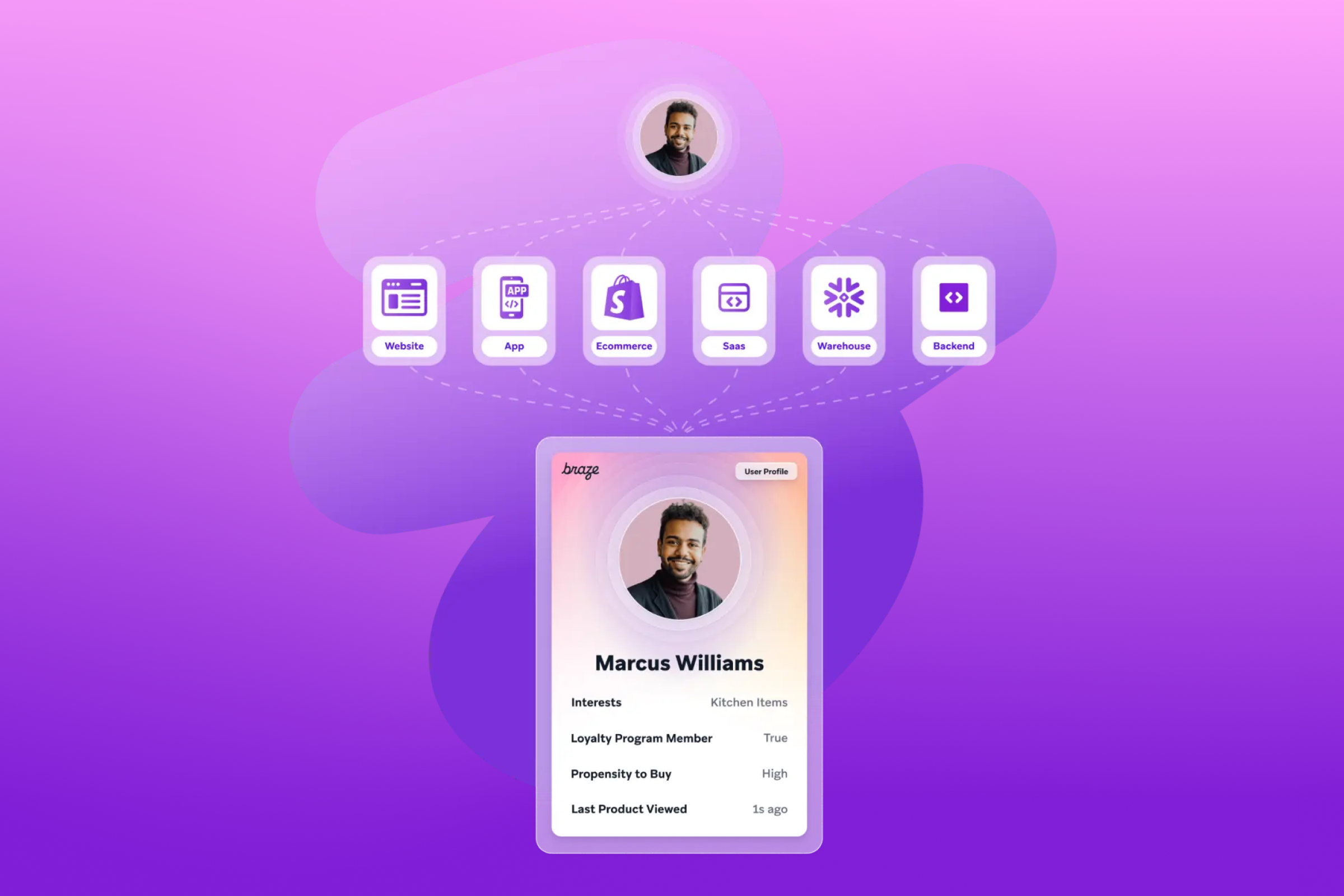
Four capabilities sit at the heart of any CEP worth evaluating
Cross-channel messaging means a customer can move from an email to an app to a browser and receive a coherent experience across all three—not three separate conversations running in parallel.
Customer lifecycle orchestration—sometimes called customer journey orchestration—is the ability to design and automate experiences that adapt as a customer progresses—from first purchase through to loyal advocate, or from active user to someone showing early signs of disengagement.
Cohesion addresses the challenge that many platforms face where, despite claiming cross-channel capabilities and orchestration, their origins cause these channels to remain disjointed within the platform and not fully integrated within the orchestration layer itself. True cohesion ensures that all channels are seamlessly unified and fully accessible within the orchestration framework, delivering a genuinely connected customer experience.
Personalization engines use behavioral data, purchase history, and predictive signals to determine what message, offer, or experience is most relevant to each individual at any given moment—at scale.
Why companies adopt customer engagement platforms
According to the 2026 Global Customer Engagement Review from Braze, 93% of marketing leaders say AI enables them to understand their customers' preferences, behaviors, and future actions with more accuracy than before—yet only 53% of consumers say brands are accurately predicting their wants and needs. For marketing teams, that 40-point difference is a signal that data and delivery aren't yet working together effectively enough to maximize business outcomes like customer retention and personalized messaging.
A customer engagement platform can help in the following ways:
- Lower acquisition costs now: By effectively converting potential customers through targeted engagement and personalized messaging, you can reduce the initial cost of acquiring new users.
- Lower acquisition costs over time: Retaining and growing existing customer relationships is significantly more cost-effective than constantly replacing lost ones.
- Stronger customer retention: By tracking behavior across the full customer lifecycle, teams can identify and act on early signs of disengagement—a core principle of customer lifecycle marketing.
- Personalization at scale: Unified customer profiles and real-time data make it possible to tailor content, timing, and channel to each individual—across millions of users simultaneously.
- Consistent cross-channel experiences: Customers move between apps, email, browsers, and devices without thinking about it. A CEP makes sure the brand experience follows them coherently.
- First-party data activation: As third-party data becomes less reliable and consumer privacy expectations rise, a CEP gives brands a way to build and act on data they actually own—collected directly from real customer interactions with the brand.
- Deeper customer loyalty: When customers consistently receive experiences that feel relevant and timely, personal not invasive, they're more likely to return, spend more, and recommend the brand to others.
Key features of modern customer engagement platforms
There are several customer engagement solutions on the market, with different builds and features. The underlying architecture determines how quickly data flows, how accurately segments update, and how reliably personalization works at scale—so the feature list only tells part of the story. Look for the capabilities that will make adoption and use a smooth transition.
Data integration—and the customer data activation it enables—is the foundation everything else depends on. A CEP needs to connect cleanly to the tools already in use—CDPs, data warehouses, analytics platforms, attribution tools—pulling customer data in and pushing engagement data back out in real time, without requiring custom engineering work for every connection.
Cross-channel messaging puts that data to work. The best cross-channel engagement platforms orchestrate experiences across email, mobile push, SMS, in-app, web, and beyond from a single interface—triggered by live customer behavior rather than scheduled sends. A customer who browses on mobile, abandons a cart on desktop, and opens an email the next morning should feel like it’s one continuous conversation.
AI-driven personalization is where modern platforms separate themselves from legacy tools. AI capabilities tailor content, timing, and channel selection to each individual—learning from behavioral signals and predicting what's most likely to drive the next action.
Automation workflows translate insights into action. Journey builders remove the manual overhead of managing complex lifecycle campaigns, as they respond to real-time behavior—branching, adapting, and re-routing based on what a customer does or doesn't do.
Experimentation keeps performance improving. The ability to test at the message, journey step, and sub-journey level means teams can run continuous experiments without slowing down execution.
Reporting and analytics close the loop. Real-time performance data, tied directly to campaign and journey outcomes, gives teams the visibility to make faster, better-informed decisions rather than waiting on end-of-month reports.
Two-way and interactive experiences go beyond broadcasting. Surveys, in-product experiences, gamification, and two-way messaging turn one-directional campaigns into genuine conversations—creating more opportunities to learn about customers and deepen their connection to a brand.
Customer engagement platform comparison
The market for customer engagement platforms spans purpose-built CEPs, broader marketing clouds, and retention-focused tools with varying strengths. Here's a side-by-side look at the leading platforms, what they do well, and who they suit best.
1. Braze
Braze is a purpose-built customer engagement platform designed for real-time, cross-channel orchestration at scale. Its stream-processing architecture powers live segmentation, personalization, and journey execution across email, mobile push, SMS, in-app, web, WhatsApp, and more—with BrazeAI™ embedded throughout to automate decisions, personalize content, and optimize journeys continuously.
Strengths: Ease of use and short time-to-value; Real-time data architecture; native AI including BrazeAI Decisioning Studio™ and BrazeAI™ Agents; canvas-based journey orchestration; strong cross-channel coverage; flexible integrations with CDPs, data warehouses, and analytics tools.
Ideal for: Companies of all sizes that need to personalize and orchestrate cross-channel engagement at scale, with particular strength in retail, media, financial services, and gaming.
Pricing model: Value-based pricing across three dimensions: platform edition, monthly active users, and flexible credits for messaging volume and AI usage. No seat-based licensing. Custom pricing; contact Braze for a quote.
2. Salesforce Marketing Cloud
Salesforce Marketing Cloud is an enterprise marketing suite built natively on the Salesforce platform, covering email, mobile, web, SMS, WhatsApp, advertising, and journey management—with deep integration into Salesforce CRM and Data Cloud. Agentforce AI agents power autonomous campaign creation, real-time personalization, and performance optimization across tiers.
Strengths: Integration across Salesforce CRM, Sales Cloud, and Service Cloud for teams already operating on that stack; Agentforce AI agents as Salesforce's declared strategic priority; two-way conversational messaging via SMS and WhatsApp on Advanced Edition only.
Ideal for: Large organizations with the IT resourcing and budgets to implement and maintain a multi-product, multi-edition Marketing Cloud footprint alongside Sales, Service, and Data Cloud
Pricing model: Organisation-based, billed annually. Full marketing automation begins with the Growth Edition at $1,500/org/month, with the Advanced Edition at $3,250/org/month. Additional capabilities are available as add-ons.
Before comparing licensing costs, account for the full stack: real-time personalization, CRM data activation, and mobile capabilities each require separate SKU purchases beyond the base Marketing Cloud license. Data Cloud and Marketing Cloud Personalization are each listed at approximately $108,000/org/year on Salesforce's public pricing page. Ongoing implementation and support through Salesforce's GSI partner network (a practical necessity given the platform's complexity) represents an additional cost layer that typically grows alongside platform usage.
3. Adobe Journey Optimizer
Adobe Journey Optimizer is a customer journey management solution built natively on Adobe Experience Platform (AEP), bringing together real-time customer profiles, decisioning, content, and delivery into a single canvas across email, mobile, web, in-app, SMS, and in-person channels.
Strengths: Deep native integration across Adobe Experience Cloud; AI-powered content generation and intelligent offer decisioning; strong data governance and privacy controls.
Ideal for: Enterprise brands with complex marketing operations where data governance tooling is a priority—where teams have the budget and IT resources to manage AEP as a foundational data layer
Pricing model: Three packages—Select, Prime, and Ultimate—scaling from core journey orchestration through to advanced offer decisioning and AI-powered tools. Contact Adobe for a customized quote.
4. Iterable
Iterable is a cross-channel communication platform delivering personalized messaging across email, SMS, mobile push, in-app, and web. Its Iterable AI Suite powers decisions across segmentation, content personalization, and journey performance.
Strengths: Explainable AI for content recommendations; email-focused campaign builder; REST API access for data ingestion, with third-party tooling required for warehouse-native integrations
Ideal for: Growth-stage teams with straightforward lifecycle and email-centric use cases, where journey sophistication, mobile depth, and data infrastructure scale are not yet primary requirements.
Pricing model: Custom pricing based on active profiles, email volume, and custom events tracked.
5. MoEngage
MoEngage is an insights-led customer engagement platform covering cross-channel marketing, analytics, web and app personalization. Merlin AI powers predictive segmentation, send-time optimization, content recommendations, and intelligent path optimization.
Strengths: Cross-channel coverage spanning push, email, SMS, in-app, WhatsApp, and web; Merlin AI toolset and reporting dashboard with customer journey insights
Ideal for: Growing consumer brands, particularly in emerging markets, where cost is the primary selection criterion.
Pricing model: Usage-based, tiered pricing on monthly tracked users (MTUs) and messaging volume. Entry-level plans start around $999/month, scaling with audience size and channel usage. Note that trackable events and attributes may be subject to usage policy limits, and advanced capabilities such as nested data support are available as add-ons at higher tiers.
6. CleverTap
CleverTap is an all-in-one customer engagement platform with strong retention analytics, behavioral segmentation, and campaign orchestration—powered by CleverAI™ agentic AI.
Strengths: Agentic AI via CleverAI™ for autonomous, ROI-driven individualization; strong retention analytics and behavioral segmentation; real-time experimentation and lifecycle optimization; broad channel coverage including WhatsApp and RCS.
Ideal for: Consumer brands in India, Southeast Asia, and select emerging markets (particularly in e-commerce, fintech, and gaming) where cost is the primary selection criterion and where data warehouse integrations, advanced journey flexibility, and reporting precision are not yet core requirements.
Pricing model: MAU-based tiered pricing. The Essentials plan starts at $75/month for up to 5,000 MAUs, scaling upward. Note that the entry-level plan excludes AI features including intelligent timing, intelligent selection, and experiment paths, which are gated to higher tiers. Enterprise pricing available on request.
How to evaluate customer engagement platforms
Choosing a customer engagement platform is a long-term decision, and the difference between platforms that look similar on paper often only becomes clear once you're deep into implementation. A structured evaluation process—tested against your actual data, use cases, and team—is the most reliable way to find the right fit.
Here's a framework to work through before and during your evaluation.
1. Define your non-negotiables first
Before looking at any platform, identify the capabilities your specific use cases genuinely require—not features that sound compelling in a pitch. This includes channel coverage, data architecture requirements, AI capabilities, and compliance needs. The clearer you are on this before demos begin, the harder it is for vendors to distract you with impressive-looking features that don't serve your actual goals.
2. Map your existing stack and ask how data flows in both directions
A CEP that creates a new data silo defeats much of its own purpose. Understand your integration requirements before evaluating vendors—your CDP, data warehouse, analytics tools, and attribution platform—and ask each vendor specifically how data connects in and out. Look for native connectors rather than custom integration work, and test how the platform handles non-standard data schemas or custom events. The question isn't whether a platform can integrate; it's how much engineering effort that requires and how reliably it holds up at scale.
3. Look past AI marketing language and ask what the features actually do
Does the platform offer predictive churn scoring? Intelligent send-time optimization? Content recommendations based on individual behavior? Automated variant selection within journeys? And critically—are these capabilities built into the core platform and available to all users, or gated behind expensive add-ons? The most effective AI in a CEP automates decisions marketers were already making manually, at a speed and scale that manual work can't match.
4. Interrogate the data architecture
The infrastructure underneath a platform determines everything above it. A platform built on stream processing—where data is ingested and acted on continuously—behaves fundamentally differently from one that batches data overnight. Ask vendors directly: how quickly do customer profiles update after an action is taken? How is segmentation built—against a live data stream or a periodic query? Can the platform trigger a message within seconds of a behavioral event? The answers reveal whether a platform can genuinely respond to customer behavior in the moment, or whether it approximates it after the fact.
5. Evaluate for where you're heading, not just where you are today
Ask what happens to performance and cost as your user base grows, as you add channels, and as your journey complexity increases. Request specifics on how the platform handles peak load—a promotional send to millions of users, for example. Pricing models are important here too: platforms that charge per database size or per seat can become significantly more expensive as you grow, in ways that aren't always obvious at contract stage.
6. Test with real data, not vendor demos
Request a proof-of-concept using your own journeys and customer data. Score each platform against the same criteria, weighted by business priority, so comparisons stay objective. Ask for customer references comparable to your business in size, industry, and use case—and calculate total cost of ownership across implementation, onboarding, training, and support, not just the license cost.
The vendor that performs best on a features checklist may not be the one that delivers the most value twelve months after go-live.
Customer engagement platform FAQs
What is a customer engagement platform?
A customer engagement platform is software that supports real-time, cross-channel customer engagement, helping teams deliver personalized, coordinated experiences across email, mobile, SMS, web, and more from a single interface. It connects customer data to orchestrated messaging and journeys across the full customer lifecycle.
How do companies choose a customer engagement platform?
Companies choose a customer engagement platform by evaluating integration capabilities, data architecture, AI features, and scalability against their specific needs. A structured process—including proof-of-concept testing with real data, total cost of ownership analysis, and comparable customer references—helps teams find the platform that fits how they actually work.
What features should a customer engagement platform include?
A customer engagement platform should include real-time data processing, live customer profiles, cross-channel journey orchestration, AI-driven personalization, multivariate testing, automation workflows, reporting and analytics, and native integrations with the broader marketing and data stack. These capabilities should work together from a single interface, not function as disconnected modules.
What is the difference between a CRM and a customer engagement platform?
A CRM manages customer records and relationship workflows, typically tied to sales and service operations. A customer engagement platform is built for orchestration—connecting real-time behavioral data to coordinated messaging across channels. Both can coexist in the same stack, but they serve fundamentally different functions.
Related Tags
Be Absolutely Engaging.™
Sign up for regular updates from Braze.