Marketing automation: Tools, strategies, and real-world examples for smarter campaigns
Published on January 27, 2026/Last edited on January 27, 2026/21 min read

Team Braze
Contents
Marketing teams are under pressure to launch an increasing number of lifecycle journeys across more touchpoints, with fewer people and less time to launch. That creates a knock-on effect of more day-to-day work to keep audiences current, coordinate messaging across channels, and prove what impacts results. Marketing automation helps by taking repeatable work off your team’s plate so that journeys can run, adapt, and improve without constant manual upkeep.
This guide breaks down how marketing automation works, which journeys to start with, and what to look for in a platform in 2026, including real-time data activation and AI decisioning. It also shows how Braze supports customer engagement programs that stay responsive as behavior changes, and helps connect automation to measurable ROI.
What is marketing automation in 2026?
Marketing automation is the use of software, technology or platforms to automate repetitive marketing tasks and orchestrate cross-channel customer journeys using real-time customer data and behavior.
That can include workflow automation for segmentation, personalization, message delivery, routing, testing, and optimization across multiple channels.
Marketing automation vs. scheduling
Scheduling sets a time, then sends a message to a list. By contrast, marketing automation uses workflows to run programs automatically. It can react to customer actions, refresh targeting as audiences change, and reduce day-to-day manual work.
Why marketing automation matters more than ever
The right marketing automation tools make engaging with customers both faster and easier, and return time back to marketers for higher-impact work. Automation matters because most teams are stretched thin, and the day-to-day effort of launching, updating, and measuring campaigns doesn’t scale when you’re reliant on manual processes.
Channel complexity adds another layer. Customers move between channels and devices, and their expectations change based on timing and context. Keeping outreach relevant means reacting to those moments, not relying on static lists and fixed schedules.
Core capabilities of modern marketing automation platforms
The best marketing automation platforms make it easier to engage customers at scale, while giving marketers the space to take a more high-level view of their work. When you’re comparing options, these are the value-driving capabilities that matter most.
Live customer profiles and unified data
Live customer profiles pull key customer details into one place and keep them current, so targeting and personalization don’t depend on manual updates. Profiles should auto-populate with customer information such as age, location, language, purchase history, loyalty status, affinities, and preferences, even when that data comes from different sources.
This is what gives teams a practical foundation for real-time programs, because journeys can react as customers change, not hours or days later.
Dynamic segmentation
Dynamic segmentation uses real-time data to automatically keep audiences up to date. Instead of rebuilding lists, you define the traits, behaviors, or preferences that matter, and the segment updates as customers enter and exit those conditions.
A few examples of dynamic segments include:
- Customers who reviewed a product in the last 24 hours
- App users who haven’t logged in for seven days or more
- Loyalty members with a balance of 30K points or more
Dynamic segmentation is also one of the quickest ways to reduce busywork, because it removes the constant cycle of pulling, cleaning, and refreshing lists.
Personalization across content, channel, and timing
Personalization helps outreach feel relevant, rather than generic. Platforms should support personalization across:
- Content, such as tailored messaging, offers, and dynamic blocks
- Channel selection, based on what customers respond to
- Timing, including individual-level send-time optimization
Personalization matters for results, but it also matters for trust. The more messages you automate, the more important it becomes to keep them aligned to customer context.
Workflow builder and journey orchestration
A workflow builder is where programs get designed, launched, and maintained. The strongest builders make it simple to map multi-step journeys, adjust logic without rebuilding, and keep teams aligned when several programs run at once.
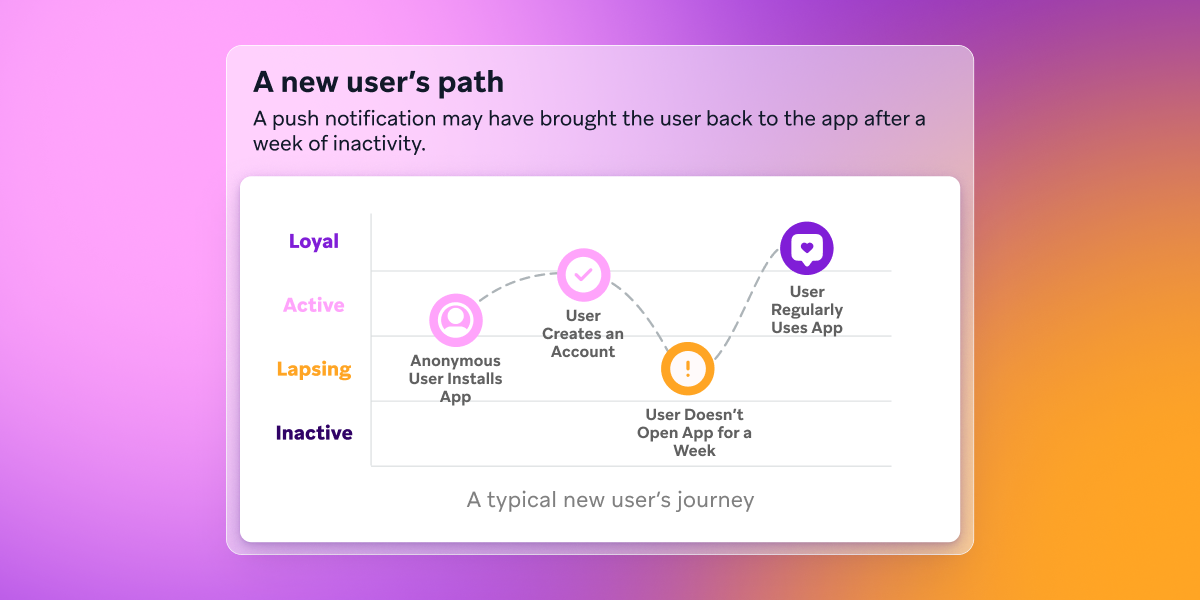
Look for support for:
- Behavioral triggers that start, pause, or branch a journey
- Prioritization and collision controls, so journeys don’t compete
- Reusable templates and modules for common lifecycle programs
Testing and optimization
Automation scales the always-on activities, and testing and optimization improves what you ship. Platforms should support experimentation that goes beyond message-level testing so teams can learn what works across a journey.
This typically includes:
- Variant testing for content and offers
- Testing across timing and journey paths
- Optimization tools that help teams improve without constant manual tuning
Analytics and reporting
Reporting should make it easy to answer two questions: what’s working, and where you’re losing people along the journey. Analytics help teams spot drop-off points, compare paths, and connect changes in targeting, timing, or content to outcomes.
Strong reporting also makes automation easier to run long term, because teams can prove impact, prioritize improvements, and avoid spending time on work that doesn’t move results.
When you can accurately measure results, you can also benefit from AI decisioning—an advanced AI capability that can continuously test and adjust what happens next in a journey based on outcomes. Journey-level reporting gives you the measurement foundation to track lift, understand why changes worked, and keep teams aligned as optimization runs.
How these capabilities support B2C and B2B
The building blocks stay the same, but how teams use them can vary. B2C programs often focus on activation, retention, loyalty, and repeat revenue. B2B programs may prioritize onboarding, feature adoption, stakeholder engagement, and expansion signals. In both cases, the platforms that perform best are the ones that keep customer data current, make segmentation dynamic, and support journey logic that’s easy to adjust as goals and audiences change.
Key marketing automation tools and software (with Braze examples)
Most marketing automation tools deal with ways to personalize content, react to behavior, control message volume, and optimize what happens next. The specifics vary by platform, but these are the capabilities marketers tend to rely on every day. So let’s take a closer look at what that means in reality.
Liquid personalization and templating
Templating gives you a reusable message framework, so you’re not building a new campaign for every segment. Liquid is a templating language that works inside that framework. It lets you pull in customer attributes and event data, then use simple logic to show different content to different people at send time.
You build one template, then use Liquid-driven dynamic fields and conditional content to tailor details like offers, recommendations, membership status, location, language, and next-best messaging based on each customer’s profile, preferences, or behavior.
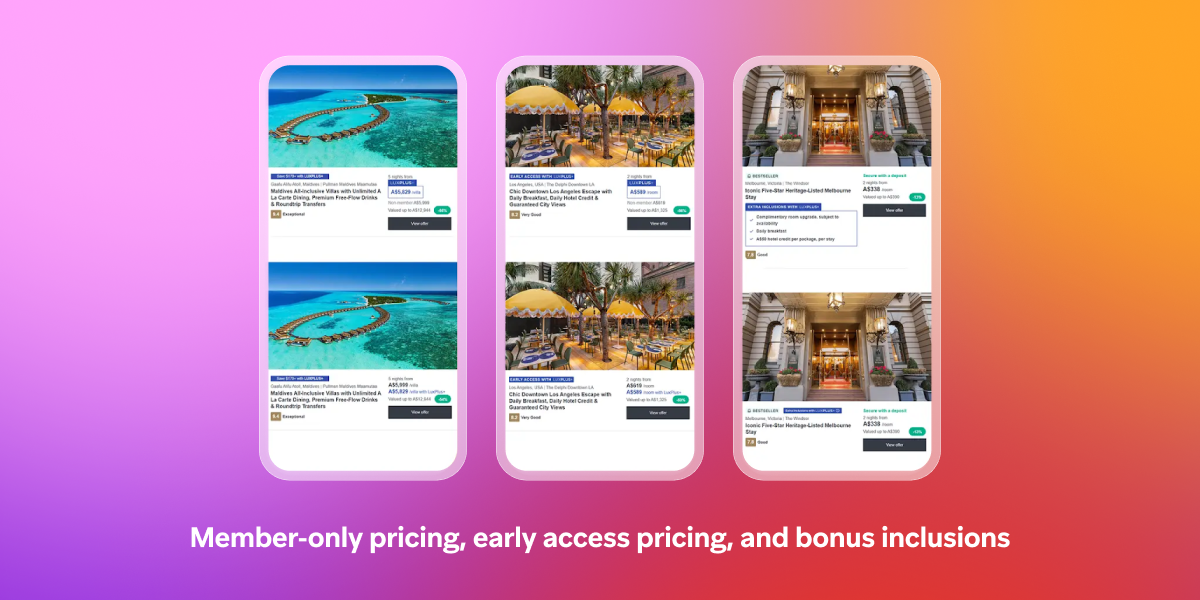
Luxury Escapes real-life example
- Goal: Show the right LuxPlus+ perks in email without rebuilding templates.
- Approach: Used Braze Catalogs and Liquid logic in reusable content blocks to display member-only pricing and benefits based on eligibility.
- Impact: 10% lift in email clickthrough rate, 100% higher CTR vs. other full database campaigns, and 142% of the membership signup goal in month one.
Behavioral triggers and event-based messaging
Behavioral triggers let you start, pause, or branch a flow based on what someone does, rather than relying on a fixed schedule. They’re a core part of responsive journeys, especially when you’re running programs that need to react to activity in real time.
Common triggers include:
- Signup and onboarding milestones
- Browsing, cart activity, and purchases
Feature usage, subscription changes, and inactivity
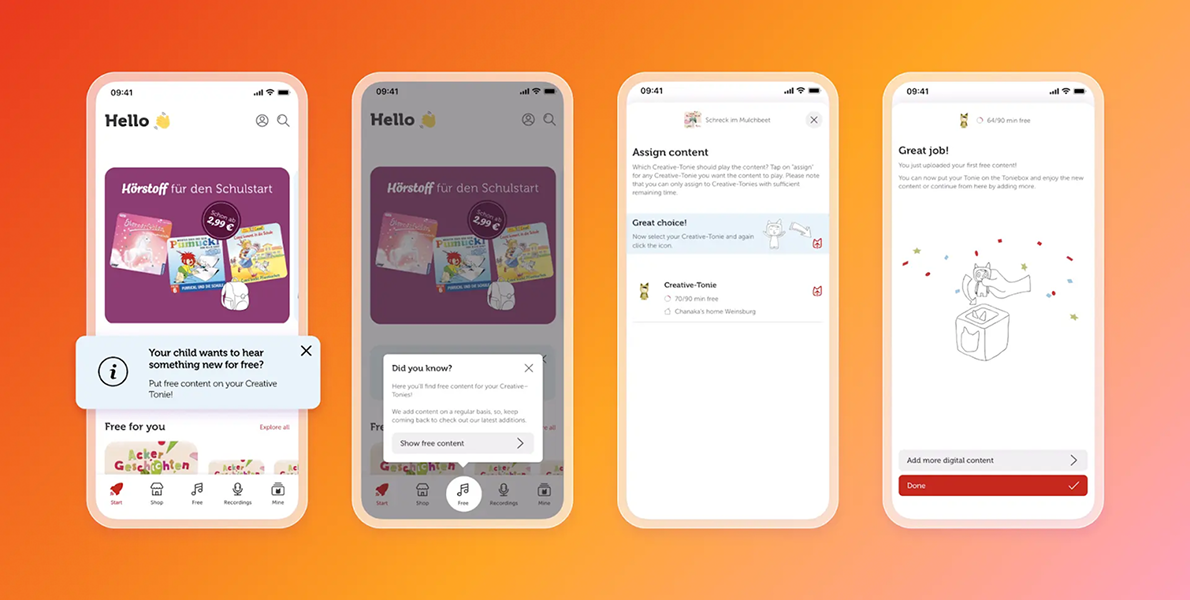
Tonies real-life example
- Goal: Move new users to a high-value action fast, then convert them from free to paid content.
- Approach: Triggered an onboarding flow from a new app session, then branched based on whether users downloaded free content. Follow-ups and upsells were triggered by content engagement and “no purchase” windows.
- Impact: 117% increase in free-to-paid content conversions year over year.
API-triggered campaigns and webhooks
APIs matter because plenty of high-intent moments start outside the marketing stack. Order events, supply changes, billing updates, and support signals often live in other systems. API-triggered messaging lets your automation respond as soon as those events happen.
Braze supports API-triggered campaigns and webhooks that can start a journey from a backend event, update profiles in real time, and route messages using business logic from other tools.
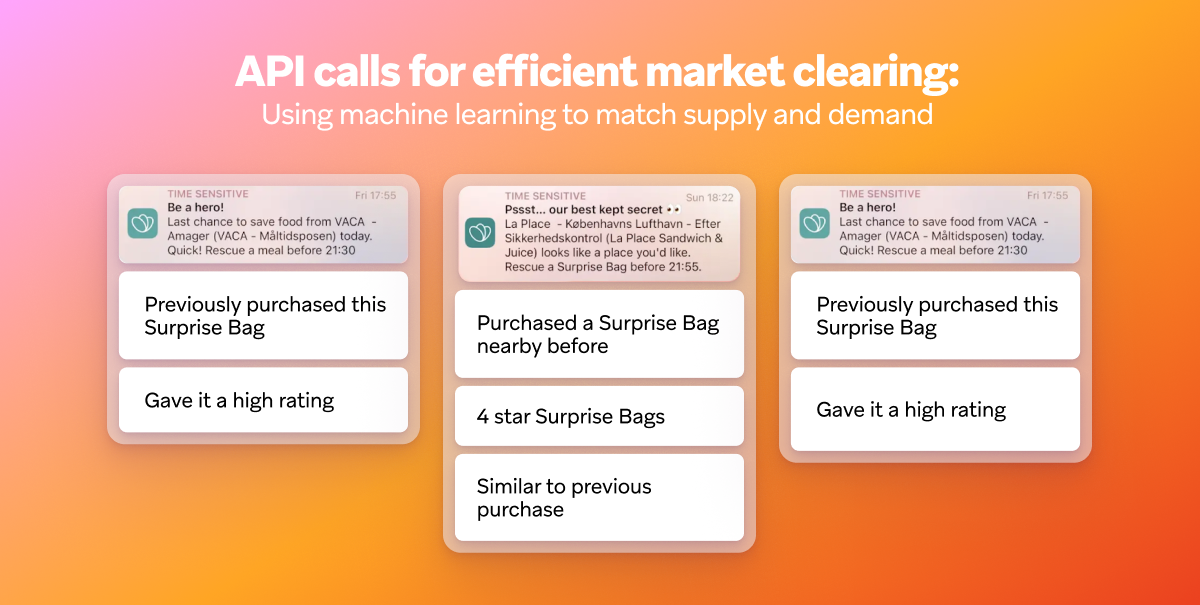
Too Good To Go real-life example
- Goal: Alert users when relevant Surprise Bags are listed nearby, based on real supply.
- Approach: Used supply-based logic to trigger API campaigns when retailers listed Surprise Bags, then matched alerts to user profile data and behavioral segments.
- Impact: 135% increase in purchases attributed to CRM, and a 2X increase in conversion rate for messages.
Frequency capping and fatigue management
Cross-channel automation can create message overload fast, especially when multiple teams are involved. Frequency controls help protect the customer experience, and support healthier deliverability over time.
Typical controls include:
- Per-channel caps for email, push, SMS, and more
- Global caps across channels
- Prioritization rules so higher-value messages win
- Suppression logic for customers in sensitive states, such as an open support case
CarpeDM real-life example
- Goal: Keep applicants engaged without bombarding them when they receive multiple likes.
- Approach: Used frequency capping and schedule delays across email and SMS within onboarding journeys.
- Impact: 84% of members engaged in the profile review process, and 15% of new customers converted through engagement campaigns.
Intelligent Channel, Intelligent Timing, and Intelligent Selection
These tools help automate three decisions teams often manage manually: which channel to use, when to send, and which variant is most likely to perform.
In Braze:
- Intelligent Channel routes messages based on channel affinity and engagement signals
- Intelligent Timing supports send-time optimization at the individual level
- Intelligent Selection tests variants continuously and shifts toward top performers
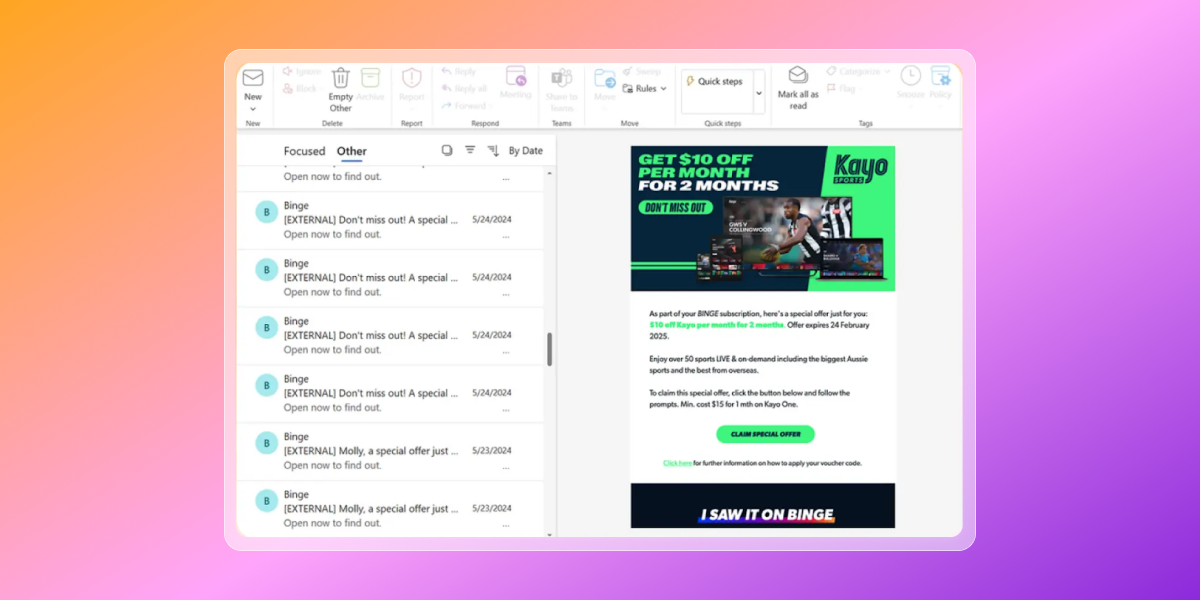
Kayo Sports real-life example
- Goal: Deliver 1:1 messaging decisions at scale across subscribers.
- Approach: Used BrazeAI Decisioning Studio™ to choose the best message, creative, channel, timing, frequency, and promotions for each person, then delivered those decisions through Braze journeys.
- Impact: 14% increase in subscriptions in FY24, 8% increase in average annual occupancy, and 105% increase in cross-sells.
Predictive events and scoring
Predictive signals help you act earlier by building audiences around likelihood, not just past behavior. That can shape who enters a journey, what offer they see, and how aggressively you follow up.
In Braze, Predictive Events can support scoring for actions like purchasing or churning, then feed that score into targeting and branching.
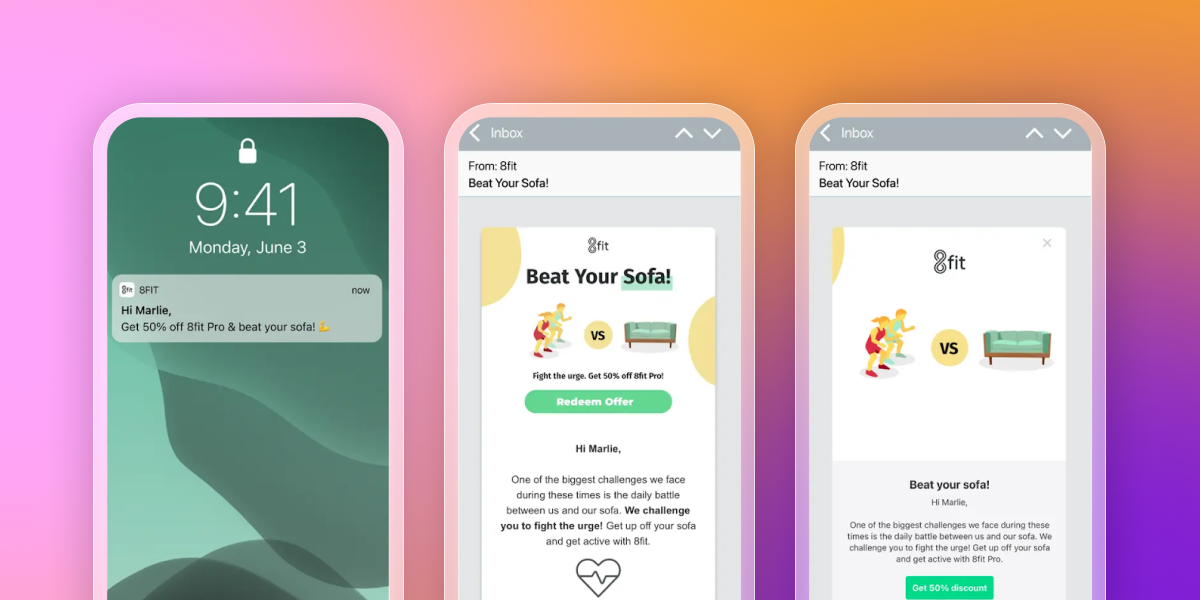
8fit real-life example
- Goal: Improve conversion efficiency without increasing send volume.
- Approach: Used Predictive Purchases to assign a purchase likelihood score, then tailored offers and targeting across email, push, and in-app message.
- Impact: 3.75X higher conversions for high-probability users versus a random cohort, plus 100,000 fewer emails sent weekly with no negative impact on conversions.
Marketing automation use cases across the customer lifecycle
A lifecycle framework helps teams prioritize the journeys that matter most, reuse proven building blocks, and improve performance over time without rebuilding from scratch.
Acquisition and onboarding
This stage is about reducing time-to-value and guiding customers to an early win. For example:
- Welcome and setup flow: Confirm signup, then trigger an in-product prompt to complete setup steps. If someone stalls, follow up with a reminder tied to what they haven’t finished.
- Activation nudges: Watch for first-use milestones, then send tips that reflect what someone has already tried, and what typically comes next.
Engagement and education
These journeys keep customers moving after the initial spike of interest. Such as:
- Feature discovery flow: Trigger when someone hasn’t reached a high-value action, and branch based on what they’ve used so far.
- Product education program: A multi-step track that adapts by intent or role, with pacing controls when engagement drops.
Conversion and revenue
These flows respond to high-intent signals where timing and relevance matter. For example:
- Browse and cart recovery: Trigger soon after abandonment, route by channel preference, and test timing and incentives by segment.
- Upsell and cross-sell journey: Trigger after a qualifying action, personalize the offer, and pause follow-ups once someone converts.
Retention and loyalty
Retention programs focus on preventing drop-off and reinforcing habits. For example:
- Win-back journey: Trigger from inactivity, then vary messaging based on predicted risk and customer value.
- Loyalty tier communications: Celebrate progress, unlock benefits, and send reminders based on tier status and recent activity.
Advocacy
Advocacy programs target customers most likely to recommend you. Such as:
- Review request flow: Trigger after a positive moment, then choose timing and channel based on prior engagement.
- Referral journey: Invite referrals after a milestone, and only follow up when someone shows interest.
Email vs. marketing automation vs. customer engagement platforms
Email service providers, marketing automation platforms, and customer engagement platforms can overlap, but they don’t all solve the same problem. The main difference is how much of the customer journey they’re built to manage.
Email marketing through an ESP
An email service provider (ESP) is built to create, send, and measure email. Many ESPs also support basic automations, like welcome series and time-based drips.
If your programs rely on signals outside email, or you need journeys that run across multiple channels, an ESP usually becomes a workaround exercise.
Traditional marketing automation platforms
Traditional marketing automation platforms typically combine email automation with CRM workflows. They’re widely used for lead nurture programs, scoring, routing, and sales handoffs, especially in B2B.
They can be a good fit when email and CRM are the center of the program, but teams often hit limits when they need to coordinate mobile marketing automation along with web and messaging experiences, or adapt quickly to real-time behavior.
Customer engagement platforms
Customer engagement platforms are built around customer engagement as the core use case. They coordinate messaging and experiences across channels, using real-time data to keep journeys responsive as customer context changes.
Platforms like Braze are a step up from traditional marketing automation, built for teams that need more than email-plus-CRM workflows. Braze brings real-time data activation and AI decisioning into the journey layer, so programs can keep pace with how customers actually behave.
How can AI improve marketing automation?
AI can reduce the manual work that slows automation down, especially the constant cycle of checking performance, updating logic, and retesting. Instead of relying on static rules that need frequent tuning, teams can use AI to run more self-optimizing journeys that learn from each new interaction and adjust decisions over time.
Rules are still important for eligibility, compliance, and guardrails like fatigue management. AI works within those boundaries by testing options continuously and shifting decisions toward what’s driving the outcome you care about.
BrazeAI Decisioning Studio™ and Intelligent Selection support this kind of always-on optimization across journey paths, offers, and messaging variations, while keeping marketer controls in place.
Evaluating marketing automation platforms: Features that matter
Shopping for marketing automation platforms can quickly become confusing, as many tools claim similar outcomes. The clearest way to compare options is to start with how you’ll run journeys day to day—how quickly you can activate data, how many channels you can coordinate, and how easily your team can test, iterate, and report on results.
Data integration and real-time data activation
How quickly can you integrate data and translate that data into usable signals inside your journeys?
- Data sources to consider: CDPs, data warehouses, CRMs, ecommerce platforms, product analytics, and support systems.
- Activation speed: Real-time event streams vs. batch syncs that update hours later.
- Data readiness: Identity resolution, event taxonomy, and governance so teams can trust segments and triggers.
If you’re relying on behavioral triggers and dynamic segmentation, data lags become a hidden limiting factor.
Ease of use and marketer-friendly UX
The workflow builder is where your team will spend a lot of their time, so the user experience (UX) can either help or hinder in this area. Consider tools that offer:
- A visual journey builder that supports branching, delays, and reusable modules
- Templates for common flows so teams launch faster
- Collaboration features that reduce bottlenecks, such as approvals, roles, and permissions
- The ability to edit journeys without rebuilding from scratch
Channel coverage for cross-channel campaigns
Channel coverage should let you coordinate messages and experiences across channels without losing customer context. Look for an orchestration layer that can run journeys across touchpoints, handle triggers from outside systems, and keep targeting, timing, and measurement connected. You’ll need:
- Email, push, in-app messaging, SMS, and web channels
- Webhooks and APIs for events that start outside the marketing stack
- Messaging apps where relevant to your audience
- Controls that prevent journey collisions across channels (frequency capping, prioritization)
AI decisioning and experimentation capabilities
AI decisioning can help teams improve performance without constantly rewriting journey logic. When you’re evaluating platforms, look for decisioning that can optimize toward a business KPI, learn continuously from outcomes, and stay transparent enough for teams to trust. Think about:
- Goal-based optimization: Decisioning should optimize toward the KPI you care about, not default to opens or clicks. BrazeAI Decisioning Studio™ is designed to optimize any business KPI.
- Continuous learning: Decisioning can run ongoing experimentation, so journeys adapt as customer behavior changes.
- Multi-dimensional decisions: Decisioning can handle combinations marketers usually test separately, like channel, message, offer, timing, and frequency, at the individual level.
- Incrementality support: Look for measurement that can show lift versus a control or holdout, so ROI is defensible.
- Transparent reasoning: Teams need to understand why a decision was made. Braze highlights traceable decisions and the reasons behind them at the customer level.
Deliverability and compliance support
Automation usually increases message volume, which makes compliance and deliverability more important. Look for:
- Consent and preference management
- Quiet hours, regional rules, and suppression logic
- Channel-specific deliverability tooling and monitoring
- Governance controls for global teams
Scalability and pricing model
As automation expands, you’re not only sending more messages. You’re also supporting more journeys, more use cases, and often more teams working simultaneously within the platform. Consider:
- Pricing clarity tied to volume, channels, and data
- Support for multiple brands, regions, or workspaces
- Operational overhead: how many people it takes to build and maintain programs
Buyer questions: What to ask vendors
Use these questions to help you get past feature checklists and into how the platform will run in practice.
- How quickly can we activate real-time behavioral data inside journeys?
- Can we orchestrate cross-channel campaigns from one workflow builder?
- What controls exist for fatigue management, prioritization, and suppression?
- How does your AI decisioning work, and what controls do marketers have?
- What reporting shows incremental lift and business ROI, not just engagement?
Marketing automation examples and real results
These snapshots show how brands have used automation to reach more customers across channels, move faster, and tie journeys to measurable outcomes.
foodora gets timing right, and keeps subscribers longer
foodora is a food delivery service operating in 700+ cities across Europe. Their mission is to make delivery fast, affordable, and easy, while building loyalty through communications that feel more like a relationship than a broadcast.
The challenge
foodora wanted to unify customer communications across channels and improve engagement. They were working across multiple platforms, which created inconsistent messaging and limited predictive insight, contributing to higher churn.
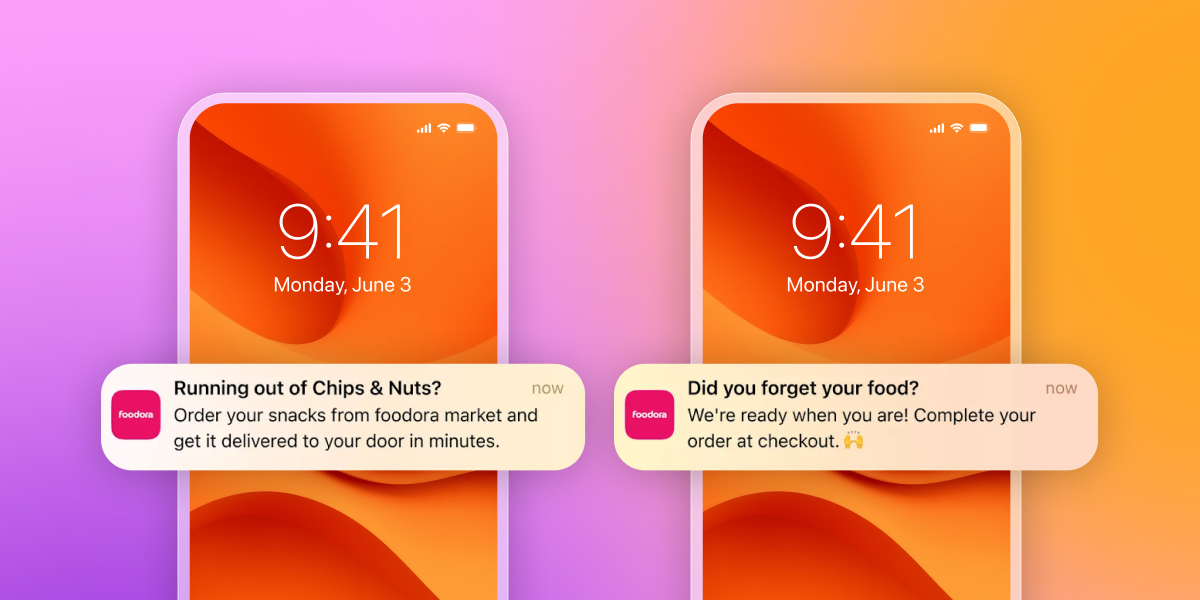
The automated approach
foodora switched to Braze to run cross-channel journeys across email, push notifications, and in-app messaging, then used Intelligent Timing to optimize when messages were delivered based on customer behavior.
The measurable outcome
- 41% conversion rate
- 26% reduction in unsubscribe rate with Intelligent Timing
- 6% increase in push direct opens
Dutch Rundown™ pours on 66x engagement
Dutch Bros is a drive-thru coffee brand with 1,000+ locations, built around community, connection, and a customer experience that feels personal.
The challenge
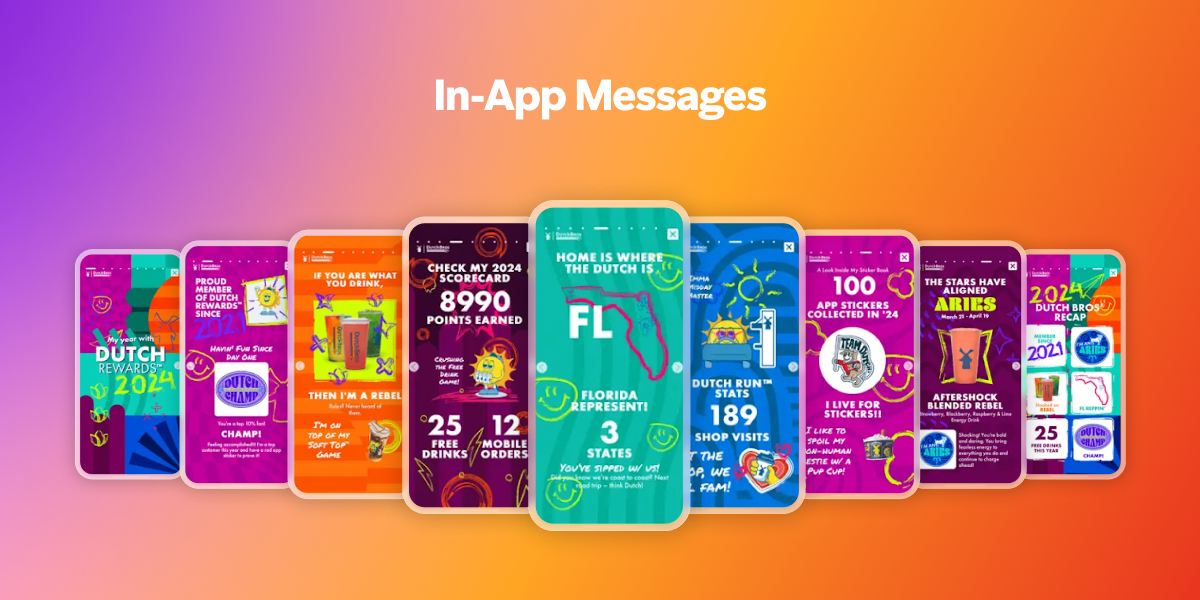
Dutch Bros’ year-end recap emails were a fan favorite, but customers who didn’t receive email communications missed out. The team also wanted a richer, more interactive experience across channels.
The automated approach
Dutch Bros rebuilt the Dutch Rundown™ as an in-app experience using full-screen takeovers and Content Cards, then automated live updates so each customer’s stats refreshed through December. Real-time, bi-directional data syncing kept the experience current, and customers could influence their final numbers by engaging with the brand throughout the holiday season.
The measurable outcome
- 66x higher engagement vs. the email-only experience
- 4x the reach of 2023 by bringing the experience in-app to all loyalty members
Grubhub serves up an 836% ROI lift with onboarding automation
Grubhub connects diners with restaurant partners across the U.S., including a Campus offering designed to support students with tailored dining experiences.
The challenge
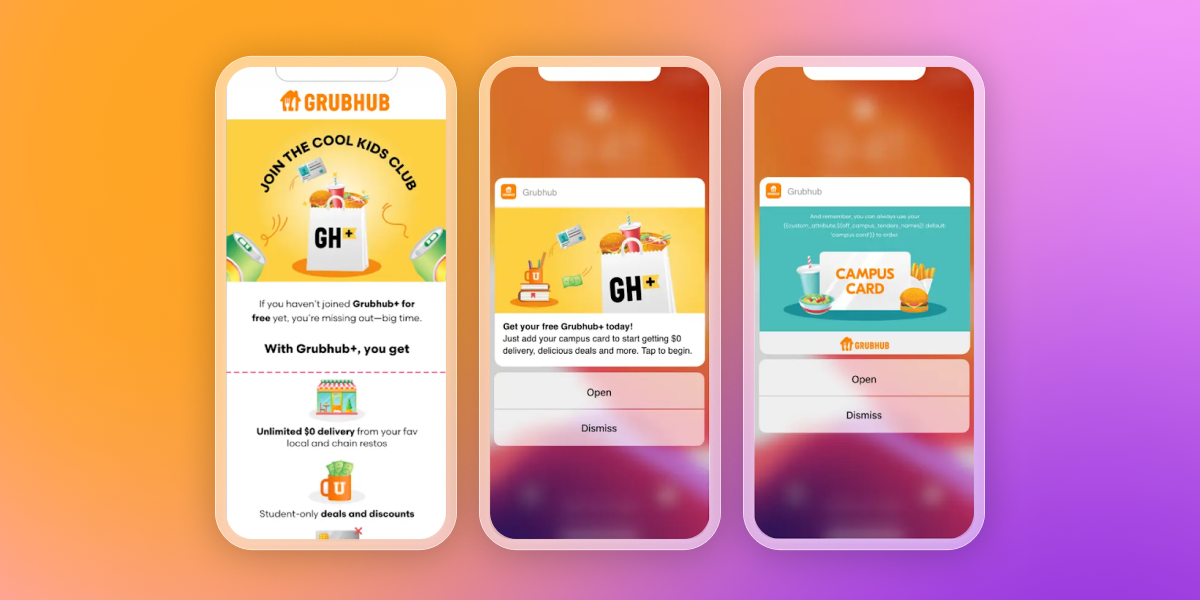
Grubhub needed to educate college students about Grubhub Campus and improve an onboarding flow where many students started, then dropped before completing key steps.
The automated approach
Using Braze Canvas, Grubhub automated a multi-stage “Welcome Stream” that ran for 30 days and adjusted as students progressed through onboarding. The journey coordinated personalized email and push, triggering the next message based on each onboarding stage, rather than relying on one-off sends or static timing.
The measurable outcome
- 836% increase in ROI
- 20% increase in orders overall
- 188% increase in Grubhub+ signups
How to get started with marketing automation (step-by-step)
Start your marketing automation projects with one or two journeys you can measure and improve quickly. That gives you a clear benchmark, and a practical path for adding more automation over time.
1. Audit channels, data, and repeatable work
Start by mapping what you send today, where the data lives, and what’s creating the most drag.
- List your active channels, including any webhooks or messaging apps
- Identify key data sources, such as your CDP, warehouse, CRM, product analytics, ecommerce, and support tools
- Call out manual work that repeats, like list pulls, suppressions, handoffs, and reporting
2. Choose one or two high-impact journeys first
Pick journeys that are high volume, outcome-driven, and straightforward to measure. Two common starting points:
- Welcome and onboarding to improve activation and reduce early drop-off
- A revenue moment, such as browse abandonment, cart recovery, or upgrade nudges
3. Define KPIs and a baseline per journey
Pick one primary KPI, plus a handful of supporting metrics, then document current performance before you launch.
- Onboarding: time-to-first-value, activation rate, week-one retention
- Abandonment: conversion rate, revenue per message, opt-out rate
- Win-back: reactivation rate, return sessions, churn reduction
4. Build the first version, then add guardrails
Start simple, then layer in the controls that keep programs manageable as volume grows.
- Dynamic segmentation so audiences stay current
- Frequency caps and suppression logic to manage fatigue
- Channel rules and fallback paths so journeys can continue even when one channel isn’t available
- A testing plan for timing, content, and offers
5. Iterate on a regular rhythm
Plan to iterate after launch. Review performance weekly at first, then switch to a regular check-in schedule.
- Adjust segments and branches based on what you learn
- Keep a changelog, so you can tie results back to specific updates
- Reuse blocks and templates, so each new journey takes less time to build
Measuring the ROI of marketing automation
To measure marketing automation ROI, track both business impact and time saved.
A basic ROI framework
Start with a simple before-and-after comparison, then add stronger methods as your program grows.
- Baseline: performance and effort before automation, including build time and results
- After launch: lift in outcomes, plus hours saved
- Incremental lift: where possible, use holdouts or journey tests to isolate impact
Metrics that show value
Pick metrics that connect to revenue, retention, and time back for the team.
Operational metrics
- Hours saved from fewer manual pulls, builds, and one-off sends
- Campaign throughput, such as journeys launched per month and iteration speed
- Fewer rebuilds, using shared templates and consistent journey logic
Engagement metrics
- Deliverability, unsubscribe rate, and opt-outs
- Opens, clicks, sessions, and in-app actions
- Response by channel and segment
Conversion and revenue metrics
- Conversion rate by journey stage
- Incremental revenue per user or segment
- Lift in upgrades, repeat purchases, or renewals
- Retention and lifetime value trends over time
The future of marketing automation: AI, agents, and omnichannel
Marketing automation is moving toward systems that can react to customer context in the moment and keep improving without constant manual tuning. AI decisioning brings always-on learning into journeys, and agentic approaches push that further by taking action toward a goal within the guardrails marketers set, like eligibility, compliance, and frequency limits.
As teams add channels, journeys need to stay coordinated and measurable without adding more manual work.
Looking to move beyond manual campaigns and one-off sends? See how Braze marketing automation helps teams orchestrate smarter, cross-channel journeys that run themselves and drive measurable growth.
Marketing automation FAQs
How does marketing automation improve efficiency for marketing teams?
Marketing automation improves efficiency for marketing teams by reducing manual work tied to launching, updating, and measuring campaigns. Marketing automation also helps teams run repeatable journeys with fewer list pulls, rebuilds, and one-off sends.
What are some marketing automation use cases?
Marketing automation use cases include welcome and onboarding journeys, feature education, browse and cart recovery, win-back flows, loyalty messaging, and referral prompts. Marketing automation use cases are often triggered by customer actions or lifecycle milestones.
What are the key features to look for in a marketing automation platform?
The key features to look for in a marketing automation platform include live customer profiles, dynamic segmentation, personalization, workflow automation, testing, and journey-level reporting. You should also look for controls for compliance and message volume.
How does dynamic targeting and segmentation work within marketing automation?
Dynamic targeting and segmentation work within marketing automation by updating audiences automatically based on customer traits, behaviors, and time windows, because customers can enter or exit a journey at any point.
What’s channel optimization and why’s it so important?
Channel optimization is choosing the channel most likely to drive the next action based on engagement signals and preferences. It’s important because it helps improve response while reducing fatigue across lower-performing channels.
What are the benefits of marketing automation for B2C and B2B brands?
The benefits of marketing automation for B2C and B2B brands include faster execution, more relevant messaging, and clearer measurement across programs, as well as fewer manual processes as journey volume grows.
What are examples of marketing automation campaigns across the customer lifecycle?
Examples of marketing automation campaigns across the customer lifecycle include welcome and activation flows, education nurture programs, conversion journeys like cart recovery, retention and win-back sequences, loyalty communications, and advocacy prompts. These often run as automated journeys tied to behavior and milestones.
What features should you look for in a marketing automation platform?
The features you should look for in a marketing automation platform include workflow automation, cross-channel coordination, real-time data activation, testing, and reporting. Also governance controls like suppression and frequency rules.
How does marketing automation differ from email marketing and CRM?
Marketing automation differs from email marketing and CRM by running automated workflows that can coordinate multiple channels, while email marketing focuses on email delivery and CRM focuses on customer record management. Marketing automation can react to customer actions and lifecycle signals as journeys run.
How can AI and machine learning improve marketing automation?
AI and machine learning improve marketing automation by helping journeys learn from outcomes and adjust decisions over time. They can also reduce manual tuning across targeting, timing, and content choices.
How do you measure the ROI of marketing automation?
You measure the ROI of marketing automation by comparing results and effort before and after automation, then tying lift to outcomes like conversion, retention, and incremental revenue. It is wise to track time saved alongside journey performance.
Related Tags
Be Absolutely Engaging.™
Sign up for regular updates from Braze.
Related Content
 Article16 min read
Congratulations to the Forge 2026 Torchie Awards winners
September 29, 2026 Article6 min read
Bring 1:1 decisioning to every marketing journey with BrazeAI Decisioning Studio™ Go
September 28, 2026 Article12 min read
Made for this: How Braze is providing new ways to build, support, and extend your campaigns
September 28, 2026