2026 email deliverability predictions: What marketers should know
Published on January 21, 2026/Last edited on January 21, 2026/5 min read

Esther Davis
Email Deliverability Consultant, BrazeAs 2026 gets underway, one thing is clear: Email providers just want senders to stick to the basics. Keep your email lists clean, prove that you're really you, and send messages people actually want to open. Getting that right isn't optional anymore—it's essential if you want your email program to function. Taking these key steps keeps your emails out of the spam folder and helps get them in front of real people.
I've worked in the email deliverability space for a while, so I know how fast the rules can change (blink twice and there's a new one). So, to help email marketers stay ahead of the curve, I asked a few of my colleagues on the Braze Email Deliverability Services team what they think this new year will bring when it comes to deliverability—and their predictions didn't disappoint! Think of their insights as a friendly tap on the shoulder from inbox experts, something that can help your brand stay trusted, keep subscribers happy, and avoid the dreaded spam corner.
What trends are deliverability experts seeing in the wild (and what does it mean for email marketing)?
Bryant Gregory, Senior Email Deliverability Consultant, Braze: This past year, I’ve seen several email lists with little to no engagement data. Without it, brands are forced to rely on signals like “sign-up dates” or basic clicks/opens, or launching campaigns to contacts based on factors like last purchase, last login, or website visits. Because these signals don’t reflect true subscriber intent or current interest, targeting is imprecise—resulting in irrelevant messaging, poor engagement, and low ROI.
Over the course of the year, I expect mailbox providers to place an even stronger emphasis on pre-send list hygiene and verification. According to Kickbox, only 23.6% of businesses verify their lists before every campaign, leaving many vulnerable to bounces, spam traps, and disengaged subscribers. Additionally, roughly 9% of emails entered via webforms are invalid—meaning nearly 1 in 10 leads could be fake or undeliverable, resulting in bounces and missed opportunities to reach real customers.
When it comes to Domain-Based Message Authentication, Reporting, and Conformance (DMARC), what shifts do you expect to see this year?
José Ramón García Layos, Senior Email Deliverability Consultant, Braze: I expect mailbox providers to start raising the bar on DMARC. Right now, the requirement from the largest mailbox providers (MPs) like Gmail, Yahoo, or Microsoft is for a p=none policy, which is useful for visibility but doesn’t actually protect users or give MPs strong trust signals.
As abuse continues to grow, especially spoofing and AI-generated phishing, p=none simply won’t be enough for providers to reliably separate legitimate senders from everyone else. Because of that, I could see MPs eventually requiring senders to move toward enforcement-level DMARC policies (quarantine or reject). This would give providers clearer identity signals and reduce impersonation attempts, while helping trustworthy programs stand out!
How do you see Brand Indicators for Message Identification (BIMI) impacting the inbox and overall email deliverability in 2026?
Song Soon Yang, Senior Email Deliverability Consultant, Braze: I expect BIMI to transition from a luxury branding perk to a baseline deliverability requirement.
Up until now, verified logos were restricted to trademark holders willing to purchase expensive Verified Mark Certificates (VMCs). However, the rollout of Common Mark Certificates (CMCs) changes the game entirely, allowing senders to display verified logos without a registered trademark. Because of this wider accessibility, an email without a logo will look inherently suspicious to users conditioned to see visual proof of identity.
This visual gap will likely drive up user complaints for non-adopters. Failing to implement BIMI won't just hurt your branding. It may directly impact customer inbox placement.
What will be the biggest shift in how marketers should approach email engagement, and how can technology like AI be used responsibly to create meaningful connections with subscribers?
Eric Stelle, Email Deliverability Principal II, Braze: Two things come to mind. First, I won’t dwell on authentication—it’s here, it’s in motion, and if you’re not already doing it, you’re behind. The real shift in 2026 is how marketers engage their audiences. Is it meaningful to the receiver? Personalization alone won’t cut it; mailbox providers are smarter and use AI alongside traditional measures to decide what lands where and to filter out bad actors.
Marketers need to create 1:1-style relationships at scale, showing respect for each audience member. Personalization for its own sake can backfire—like when you talk about a product near your phone and suddenly every website shows ads for exactly that. For audiences that are increasingly privacy-conscious, this approach can feel invasive. AI and pattern analysis offer an alternative, going deeper to uncover the “why” behind audience behavior. Through ethical application of technology, senders can be enabled to deliver their call to action when the receiver is most likely to see and heed it. Marketers who use technology to foster real, meaningful relationships—not just fill mailboxes—will stand out in 2026.
Final thoughts
Looking ahead, the playbook is pretty straightforward: keep your lists clean, verify who you are, and send messages people actually want to read. Inbox providers aren’t just tossing out rules for fun—they’re nudging everyone toward being the kind of brand that email subscribers enjoy hearing from, not one they scroll past while muting notifications.
The brands that really shine will make these expectations feel as natural as brushing your teeth or automatically connecting to the strongest Wi-Fi. When verification, authentication, and audience-first messaging become habits, your emails don’t just land—they build trust, spark attention, and maybe even score a smile. Not sure where to begin? Our deliverability team is here to help you level up your program—no toothpaste required.
Interested in digging deeper into email deliverability? Check out Demystifying email deliverability.
Related Tags
Be Absolutely Engaging.™
Sign up for regular updates from Braze.
Related Content
 Article13 min read
Braze vs Salesforce: Which customer engagement platform is right for your business?
February 19, 2026 Article18 min read
Braze vs Adobe: Which customer engagement platform is right for your brand?
February 19, 2026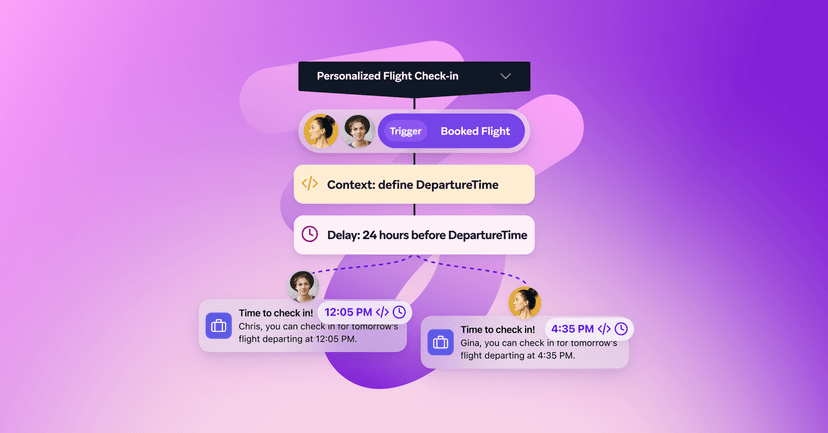 Article7 min read
Every journey needs the right (Canvas) Context
February 19, 2026