Key insights from Grow with Braze Asia 2026
Published on May 28, 2026/Last edited on May 28, 2026/10 min read
Team Braze
BrazeContents
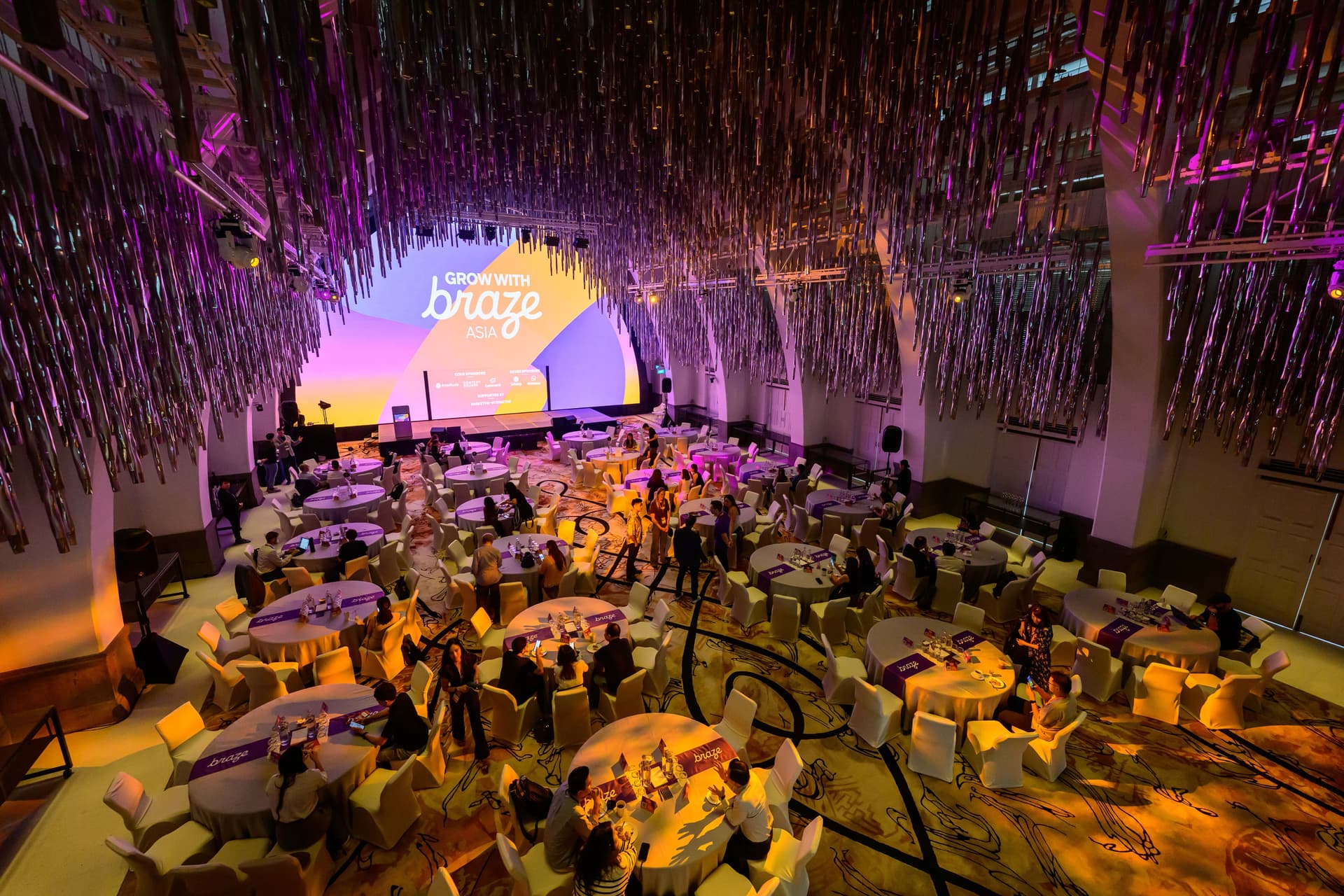
Grow with Braze Asia 2026 brought together over 220 marketing, CRM, data, and digital leaders at JW Marriott Singapore Southbeach. Under the theme “AI is the Connection Catalyst,” the participants explored one of the defining tensions facing marketers today: How to harness the speed and scale of AI without losing the human empathy and trust that turn customers into loyal advocates.
From keynotes on human-centred lifecycle thinking, to panel discussions on responsible AI, product-led growth, and automated personalization, the conversations surfaced practical playbooks that attendees could act on immediately. Today, we’ll cover the key insights from the event.
Setting the scene
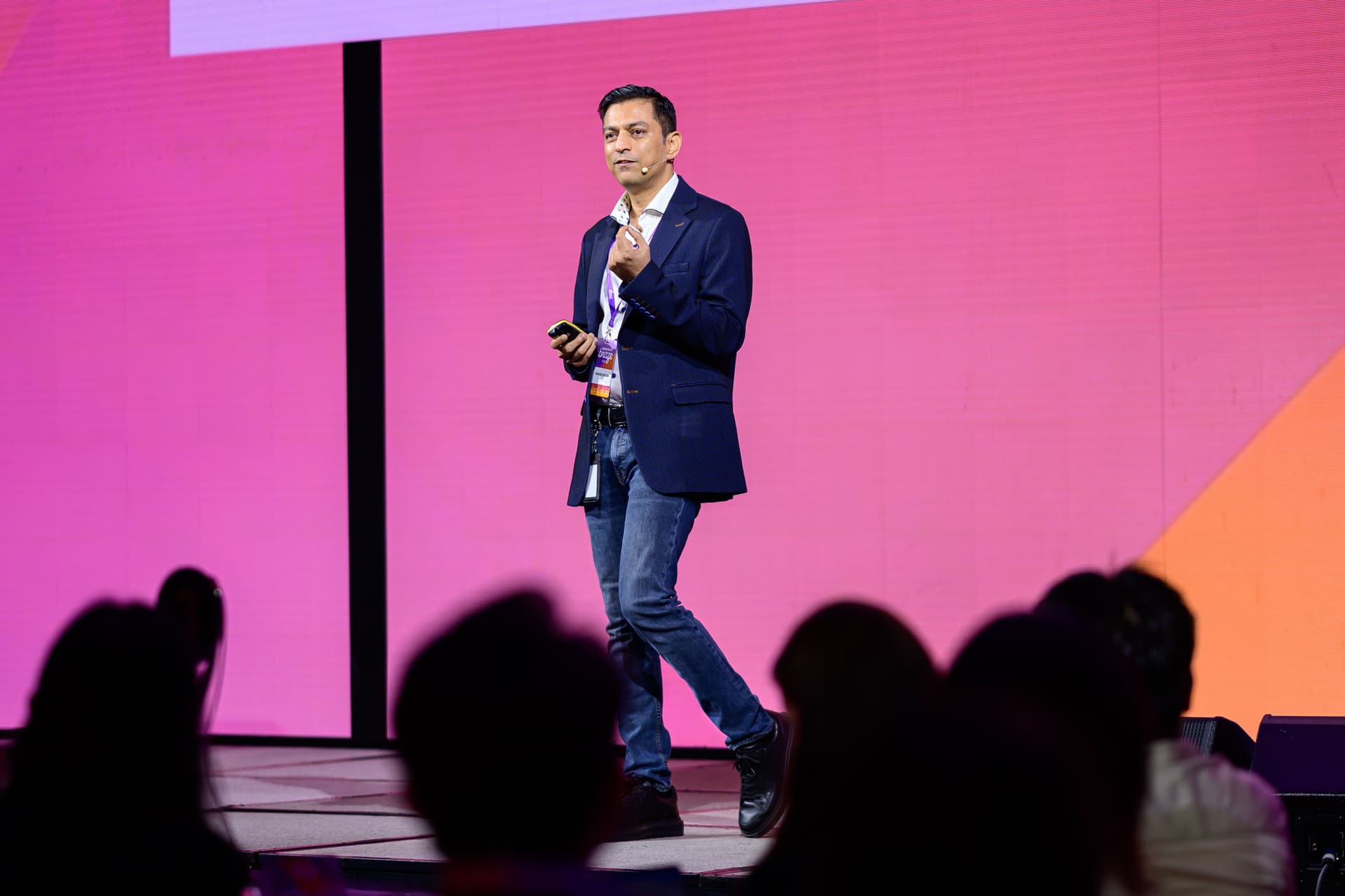
Shahid Nizami, VP of APAC and GCC at Braze, opened the event by framing the challenge clearly: In 2026, AI agents can search, decide, and act on behalf of consumers, turning one-way campaigns into multi-step dialogues between people, brands, and machines. The brands that will lead in this region are those that balance machine-driven speed and scale with genuine human nuance.
Canva: Human-centred lifecycle thinking
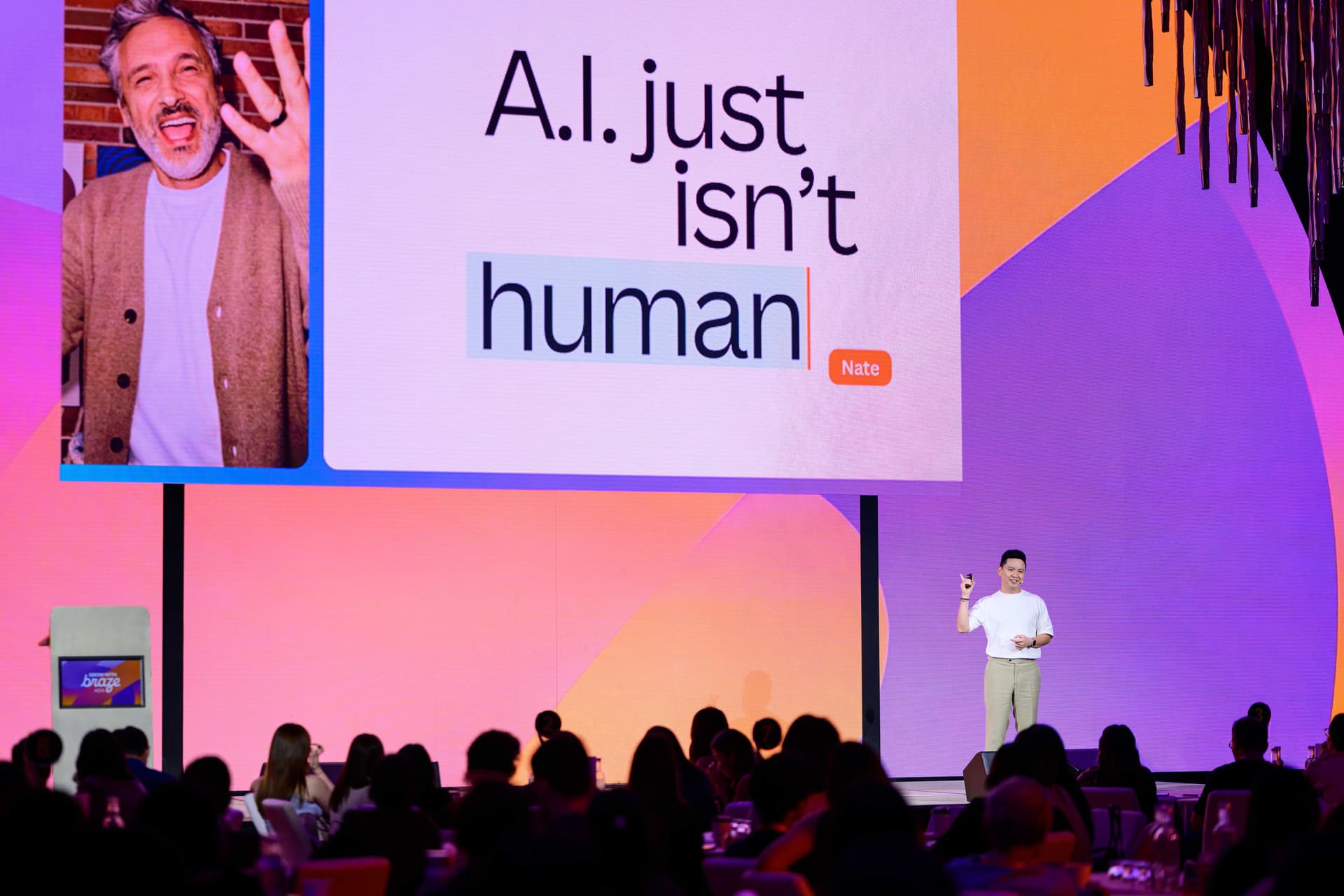
Canva sees 265 million monthly active users globally, and 95% of Fortune 500 companies using its platform as of December 2025. Nate Kwok, Canva’s Lifecycle Marketing Lead, opened with a thought-provoking question: When AI becomes table stakes, what will be the next unfair advantage?
His answer was deceptively simple. Human emotion, obvious in theory, yet can be overlooked in practice. Approximately 95% of human decisions are emotional, intuitive, and subconscious. AI-generated creativity can actually reduce purchasing intent when it falls flat, because AI doesn't truly think, feel, or understand what it means to be human.
He introduced Human-Centered Lifecycle Thinking, which entails the application of Human-Centered Design to every message, journey, and campaign. The framework asks marketers to understand the customer's emotional state first, define the right moment before the message, and think about resonance rather than just conversion.
Human-centered design is a unique approach to problem solving where the process is designed to learn directly from people, open up a breadth of creative possibilities, and then zero in on what’s most desirable, feasible, and viable for the people you’re designing for.
In a world where AI is the execution layer, the role of the marketer becomes more important, not less: To ask better questions, exercise sharper judgement, and bring the emotional IQ that no model can replicate.
Braze: The state of customer engagement in 2026
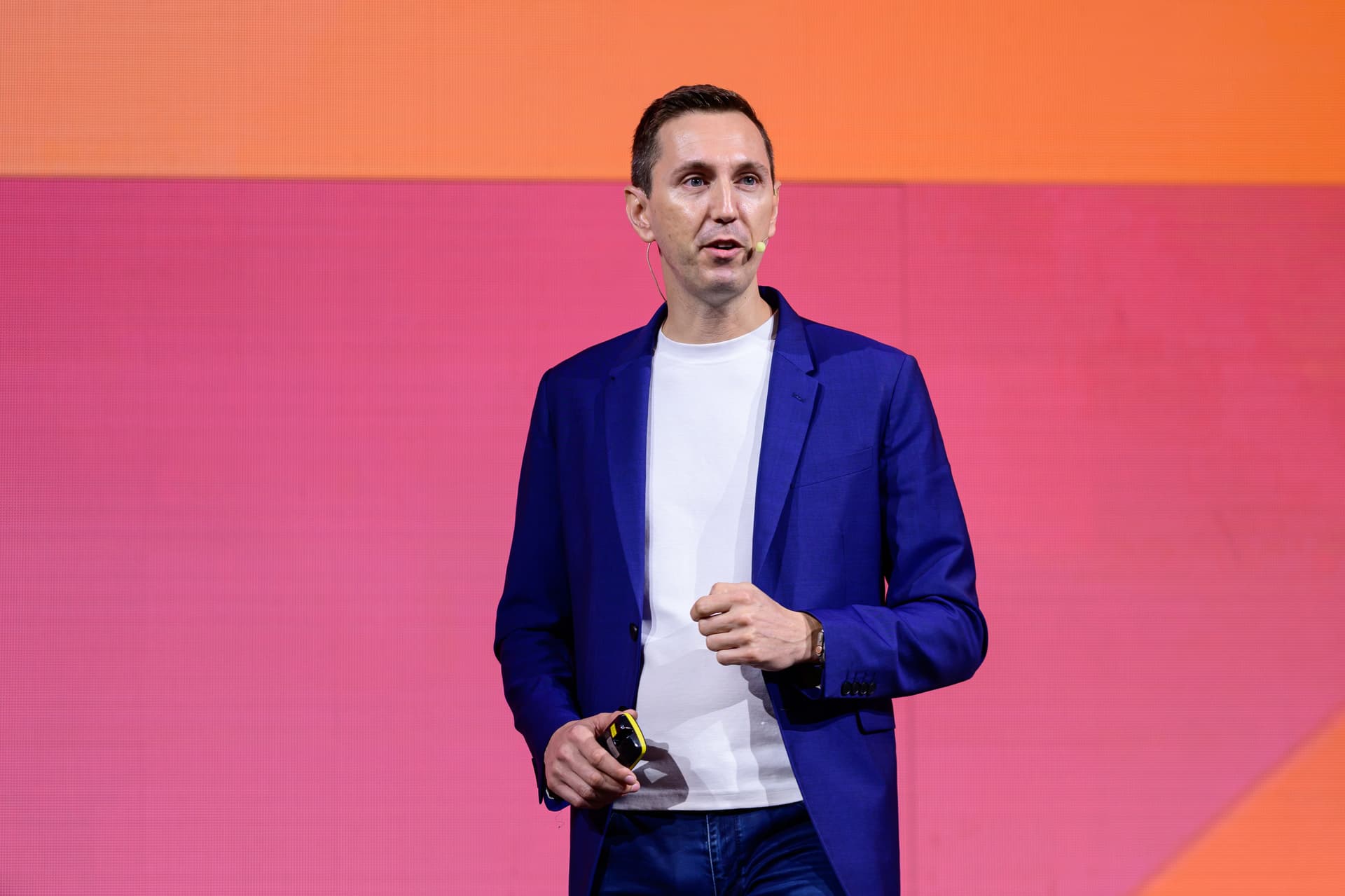
Drawing on the 2026 Global Customer Engagement Review, Sam Meyer, AVP of Asia at Braze presented three trends reshaping how brands connect with customers in Asia.
Trend 1: Brands know less than they want. While 93% of marketing leaders say AI helps them predict customer needs, only 53% of consumers agree, a 40-point gap widened by the fact that 1 in 4 consumers refuse to share any data with AI agents entirely. Luxury Escapes tackled this by using agents to dynamically classify users rather than changing their content, achieving a 10% lift in revenue per user.
Trend 2: Agents are intermediaries. Only 19% of global consumers currently use AI intermediaries, but 58% of Asian marketing leaders already report that AI intermediaries have weakened their direct customer relationships. The smartest brands are preparing by being where users are going, ensuring direct relationships add clear value, and keeping space for feedback.
Trend 3: AI is a tool, not a panacea. Only 36% of Asian marketing leaders are assembling content for each user at the moment of engagement, a significant missed opportunity. When AI decisioning is paired with real-time data streaming, human-centered thinking, and cross-channel capabilities, it can scale genuine 1:1 experiences at unprecedented levels.
Starhub, CustomerIK and Contentsquare: Responsible AI
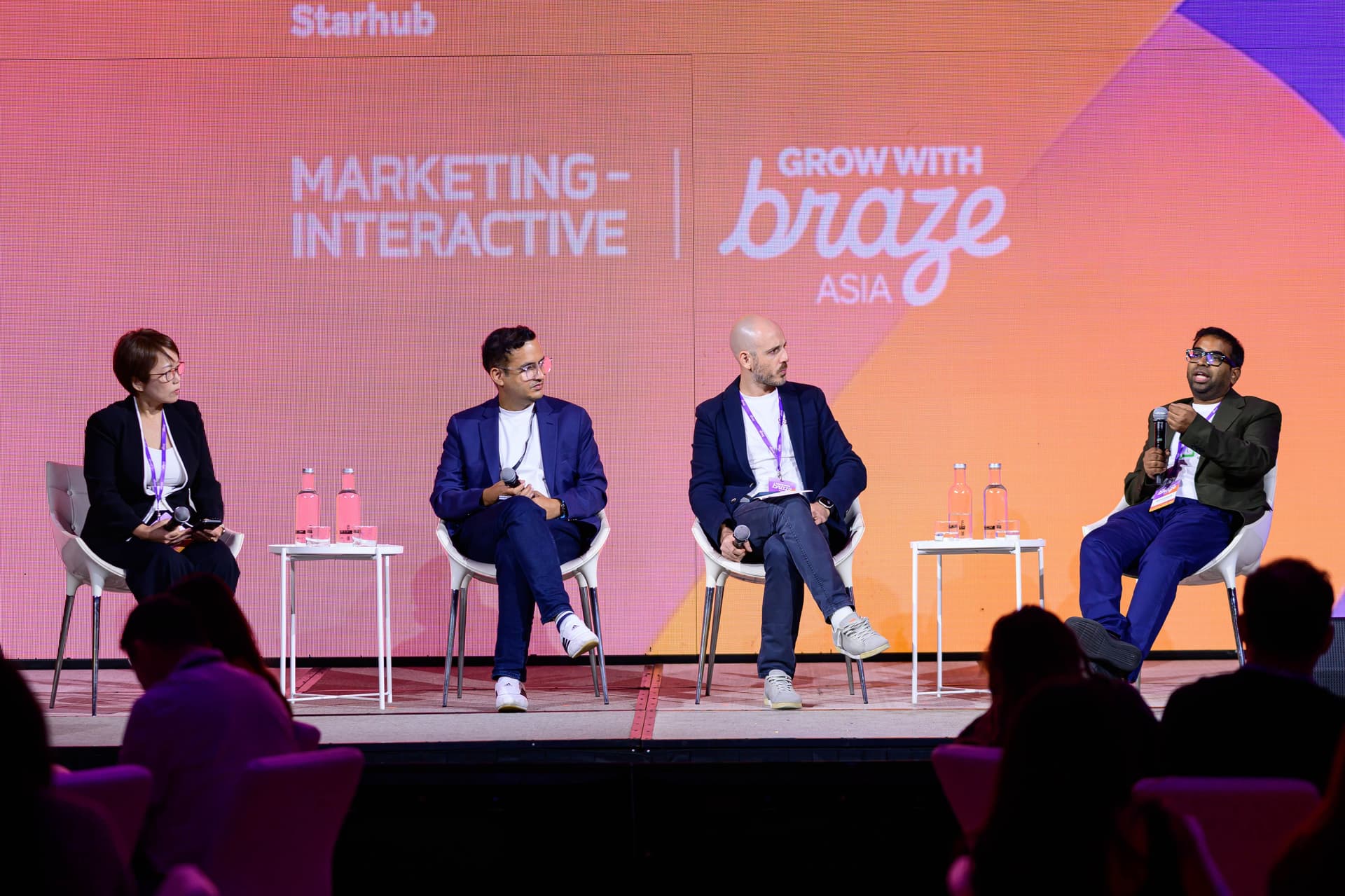
This panel moderated by Zon Lim, VP Marketing APJ & Mena at Braze, joined with Vikas Chanani, VP of Multibrand at Starhub, Andrew Elturk, Country Director at Contentsquare and Mitra Daram, CEO at CustomerIK, tackled the transition from AI experimentation to AI scaling and the governance gap that comes with it.
Vikas brought a telco lens to responsible AI. Where brands once responded to at-risk customers with blanket promo codes, AI now enables action on individual signals in real time. "AI makes it very personal on an individual basis, but scales it efficiently." The caveat: Humans must retain the guardrails, the business logic, the escalation logic, the control. Lose that, and you've lost responsible AI.
Andrew described it as "AI that earns the right to act." At alexanderwang.com, a small e-commerce team was drowning in data and unable to self-serve insights. AI surfaced a high-converting customer segment taking a completely different path through the site — invisible to the team because they could only find what they already knew to search for. The result is a rethought landing page strategy, faster decisions, and more focused optimization. "The AI didn't make a decision. It surfaced the evidence. A human looked at it, understood it, and acted."
Mitra put numbers to it with a hospitality loyalty case. Members dropping off just before a tier upgrade were all receiving the same re-engagement campaign. CustomerIK wired AI into that specific exit moment, scoring each member's signal and routing them into different Braze Canvas branches resulting in a 34% uplift in tier upgrades. "We sent less. We earned more."
Personalization tips into presumption:
Andrew offered a clean test: "Did the user knowingly share this data? Does it serve them or just us? Would this feel helpful or surveillance-like out of context?" Mitra added his "explanation test," before any journey goes live, someone must be able to explain it in plain terms. If the reasoning ends with something the customer did, you're in helpful territory; if it ends with an inference, you've crossed the line.
Vikas framed it simply: When a customer receives a message, they should never think "how does this brand know that about me?" They should think "this is actually useful." Giga operates on a principle of surprise and delight rather than volume, engaging every customer differently while maintaining strict guardrails on data use and contact frequency.
Endowus and Amplitude: Signal to scale, how leading brands turn product intelligence into lifecycle growth
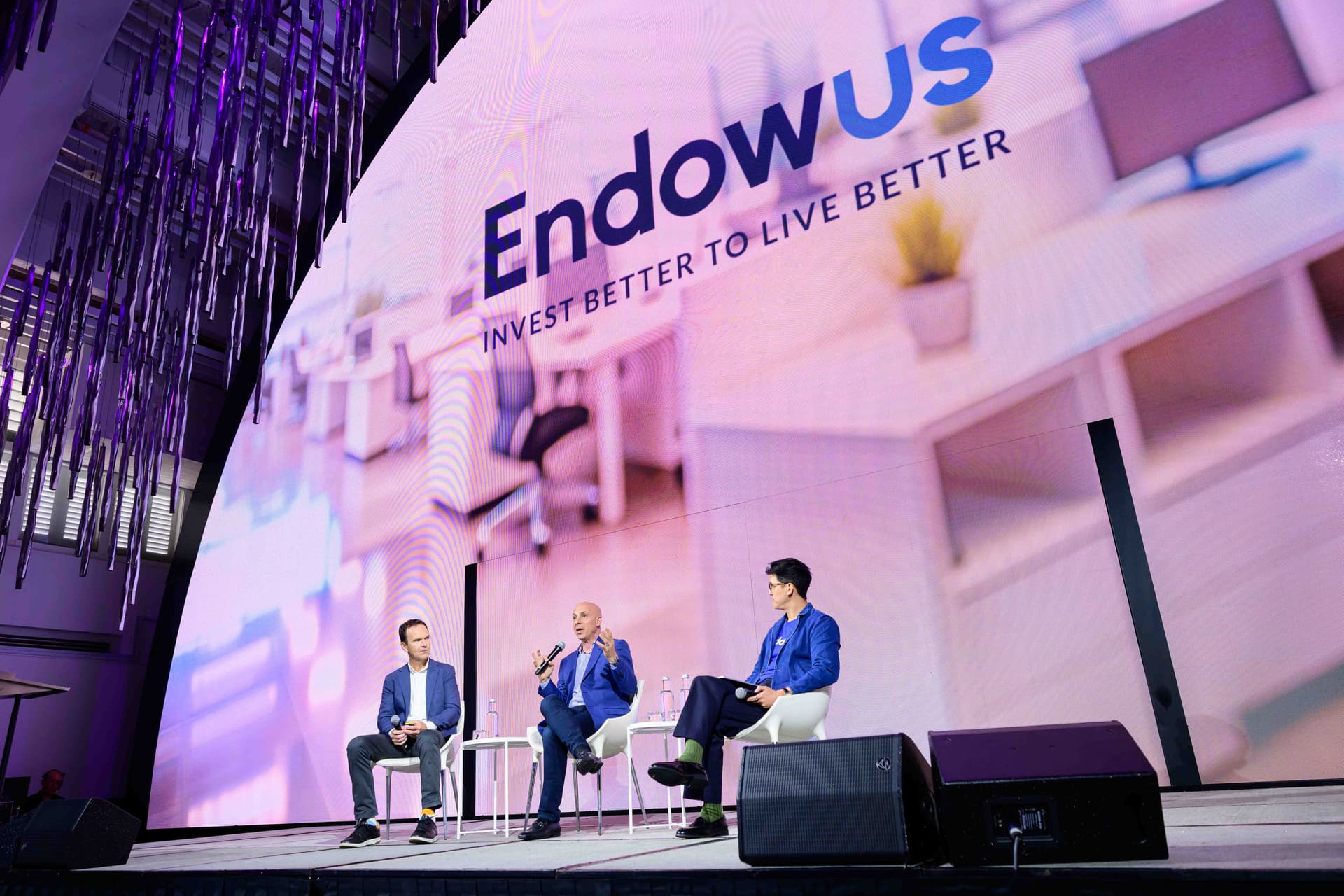
This panel focused on breaking down the wall between product and marketing with Daniel Choo, Senior Growth Lead at Endowus, Blaise Pangalos, Field CTO at Amplitude and moderator Chris Johnston, Senior Director of Partner Sales at Braze.
Daniel opened with a counterintuitive insight: silence, not redemptions, is the real danger signal in wealth management. Blaise backed this up, dormant users can represent 40–60% of a total user base, and one Asian fintech turned a single under-activated cohort into a $12M ARR recovery opportunity with a 70% reactivation rate.
Daniel framed the stack plainly: Amplitude for understanding cohorts and churn signals, Braze as the activation layer for the right message at the right moment. Blaise added that bridging product metrics to CFO outcomes requires a clear North Star metric, turning product analytics into a board-level conversation.
Both speakers closed with sharp advice. Daniel: Stop treating AI as an acceleration tool for execution and start using it to ask questions you couldn't afford to ask before. Blaise: Stop treating product analytics as a reporting tool and start building predictive cohorts before you need them.
PropertyGuru: From notification engines to growth systems
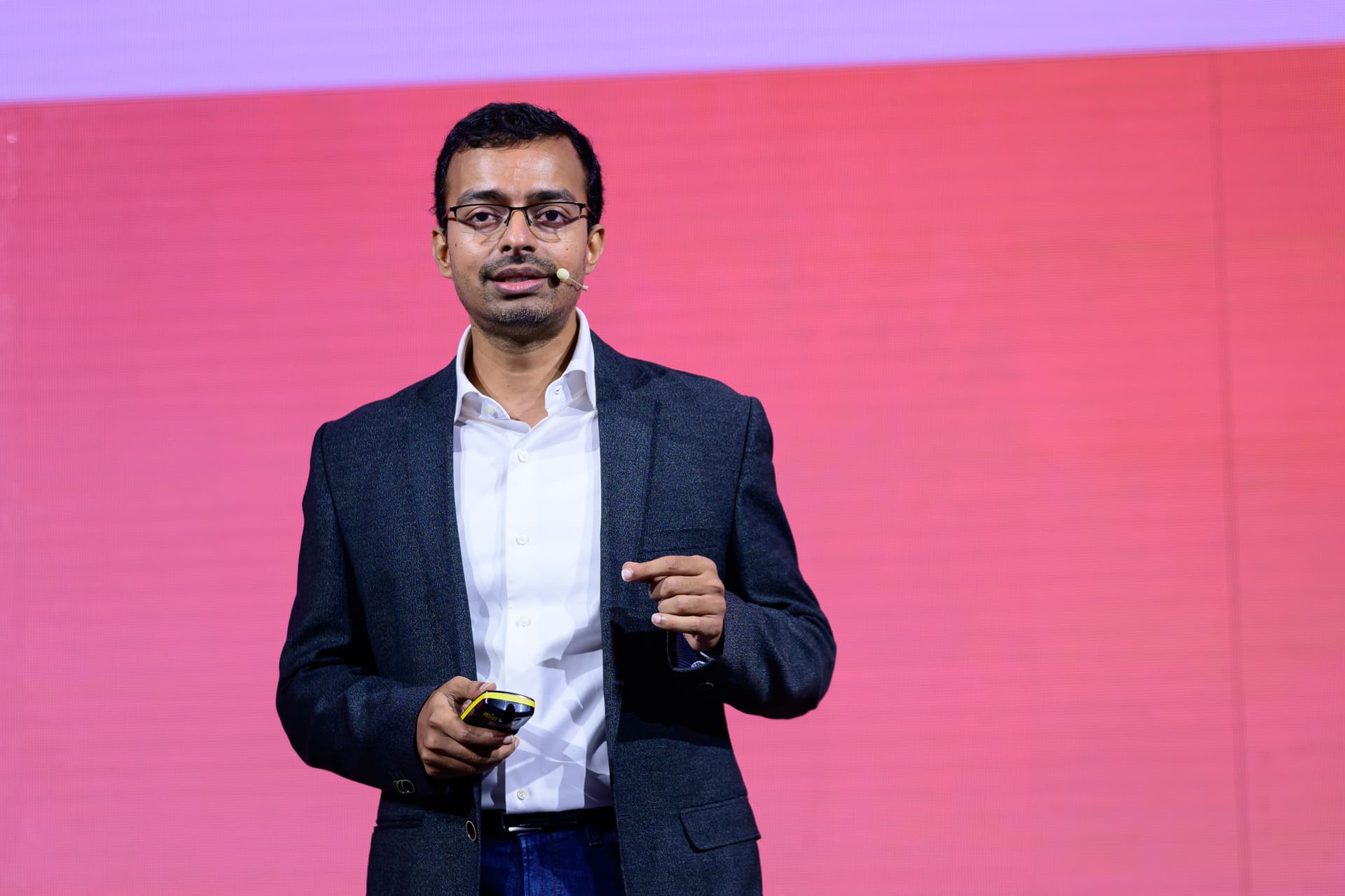
Vasu Venkataraman, Director of Consumer Activation at PropertyGuru, Southeast Asia's leading PropTech company, shared how it shifted from campaign thinking to systems thinking.
The starting point was empathy. They want fewer, better notifications, not more. Vasu described building five layers of user intelligence: Raw data, behavioral signals, intent profiling, behavioral segmentation, and predictive intelligence to generate over 1,000 touchpoints per active user across an intent cycle.
The results of investing in this foundation: a 3X email open rate against industry benchmarks across 600,000+ monthly sends, a 10X increase in monthly direct response interactions over three years, and the #1 platform ranking across markets for seekers, leads, and agents.
The four takeaways Vasu left the room with were:
- Systems outlast tactics journeys compound where campaigns decay
- Depth of user understanding is directly proportional to growth multiplier potential
- Focus on building trust and value and loyalty follows
- Connected teams with shared goals are what make growth systems actually work
Viu: Automating personalization at scale
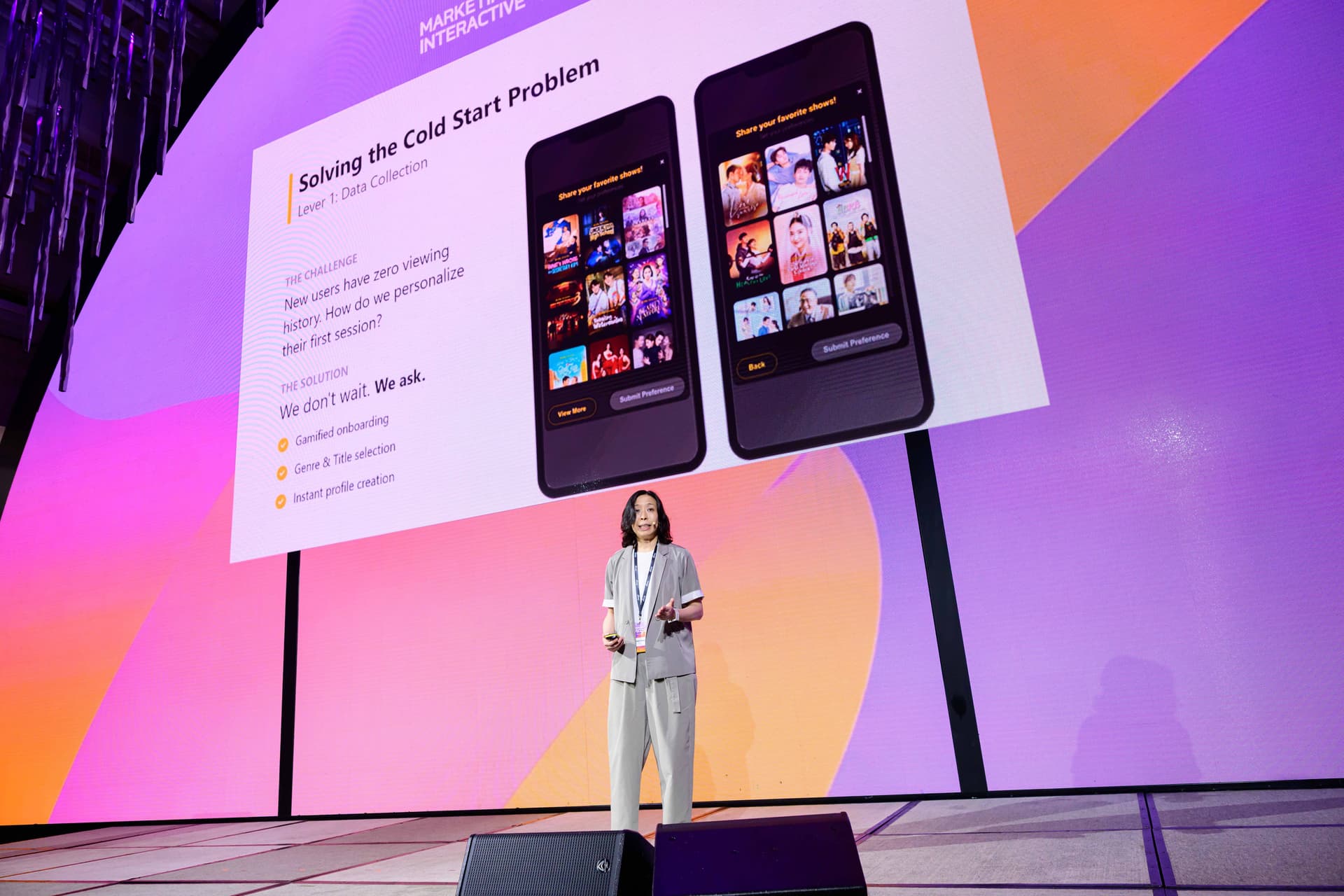
Carrie Tong, AVP Digital Strategy & Growth, brought the content programme to a powerful close, sharing how Viu moved from static segmentation to AI-driven 1:1 personalization at scale. The architecture rests on three levers.
- Data: A CDP and Braze integration stitches devices and sessions into a single unified identity, moving from seeing "devices" to seeing "people." Viu builds a nuanced affinity profile for each user across explicit signals (genre preference, language setting) and implicit signals (completion rate, binge patterns), and solves the cold start problem for new users through gamified onboarding.
- Intelligence: Viu clusters users into eight distinct personas across four dimensions: content recency, engagement depth, content popularity, and genre breadth, resulting in dynamic tags that evolve with actual behavior rather than locking users into fixed segments.
- Scale: Automated execution and operational excellence across markets, enabled by the infrastructure built on the first two levers.
Grow with Braze Asia Honours 2026
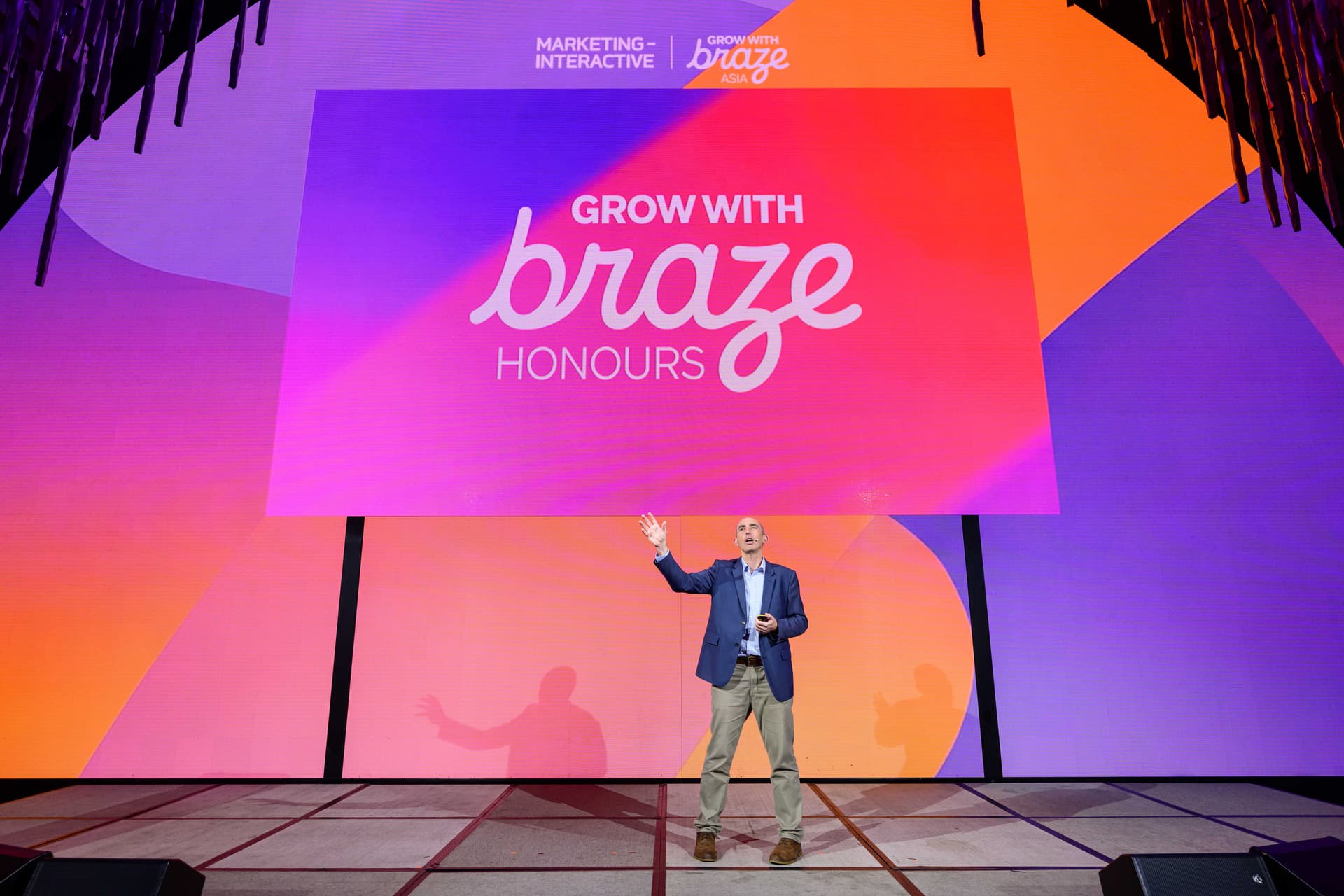
The Grow with Braze Asia Honours took place right after the mid-event tea break, hosted by Ashley Crane, Director of Customer Success, APAC, with awards presented by Shahid Nizami, Zon Lim, and Sam Meyer. The segment was born out of a simple conviction: To stop, take a moment, and celebrate the world-class work happening across Asia.
The AI-Powered Personalization award went to:
- GetGo, whose AI-powered programmes delivered a 21.8% uplift in session start rate and a 7.9% uplift in booking completion using zero financial incentives
- Viu, whose three AI models drove a 154% uplift in Day-30 retention and a 96% reduction in long-term inactivity.
The Connected Journey Mastery award was given to:
- ExpressVPN, whose personalized upsell journey in Braze Canvas achieved a 49% improvement in upsell conversion and 6.34X more revenue per transaction
- PropertyGuru, who built a WhatsApp lead verification and routing infrastructure entirely in Braze, improving property seeker feedback at scale.
The Customer Impact & Growth award recognized:
- KFC Thailand, who integrated Braze with Snowflake to power the first KFC loyalty programme in APAC, delivering +19% returning customers and compressing data reporting from one month to one day
- Charles & Keith, whose locally nuanced BFCM personalization strategy drove year-on-year growth in open rate, sales, and Braze-attributed revenue.
Three key takeaways for marketers in Asia
1. Emotion is the last unfair advantage. In a world where AI can execute faster than any human team, the marketers who will stand out are those who ask better questions, exercise sharper judgement, and design for the emotional realities of their customers, not just their behavioral patterns.
2. Responsible AI is a growth strategy. From CustomerIK's uplift in tier upgrades by sending fewer messages, to Amplitude's ARR recovery cohort, the evidence is clear: more relevant engagement earns more than volume-based automation. The brands winning in 2026 treat AI governance not as a compliance requirement, but as a competitive edge.
3. Systems compound; campaigns decay. The fastest-growing brands in Asia have stopped thinking in campaigns and started building growth infrastructure that gets smarter over time.
Grow with Braze Asia 2026 made one thing clear: The most powerful tool in a marketer's stack is still their ability to understand what it means to be human. AI is the connection catalyst, but the architects of what that connection means are in the room.
Related Tags
Be Absolutely Engaging.™
Sign up for regular updates from Braze.
Related Content
 Article13 min read
AI marketing software: How to choose and optimize AI-driven marketing platforms
May 28, 2026 Article15 min read
AI marketing campaigns: Plan, execute, and optimize across channels
May 28, 2026 Article14 min read
SMS marketing strategy: How to engage customers and drive conversions
May 27, 2026