Navigating the AI frontier: Key insights from City x City London 2026
Published on April 27, 2026/Last edited on April 27, 2026/5 min read


Team Braze
BrazeContents
Our City x City London 2026 event brought together customer engagement professionals, both in-person and online, to explore how Europe’s top marketers are shaping the future of AI-driven customer engagement.

This article highlights the main themes of the opening keynote by Bill Magnuson, Cofounder and CEO of Braze, offering actionable strategies.
The evolution of technology: From synthesizers to AI
The keynote began with a nostalgic nod to the synthesizer—a revolutionary tool that transformed music 50 years ago. The synthesizer's journey from novelty to ubiquity mirrors AI's current trajectory, where its potential is vast, but its application must be thoughtful to avoid becoming mere "slop."
In the early days of electronic music, pioneers like Kraftwerk and Daft Punk used synthesizers to create timeless artistry, pushing the boundaries of sound and building new music communities. Similarly, in marketing, the challenge is to use AI not just for more output, but to create meaningful, personalized experiences that resonate with consumers.
This symbiotic relationship between frontier technologies and artists working at the frontier of their craft pushed both to new heights. That’s how Kraftwerk and Daft Punk created iconic art that remains relevant into the 21st century, while so much synth slop has been forgotten.
Magnuson challenged the audience to ask themselves: When did AI stop provoking wonder, and start provoking groans?
The AI challenge: Outputs vs outcomes
Put simply, the challenge is the relentless output of AI. This phenomenon was captured by Merriam-Webster's 2025 word of the year, "AI Slop," highlighting the saturation of AI-generated content across various media—text, code, posts, images, and video.
While AI's capabilities impress, volume doesn’t equal value. Magnuson compared this to the decline of banner ads, which peaked in 1994 but plummeted by 2011. This decline serves as a cautionary tale for marketers: More content does not equate to more impact.
Braze has helped brands move beyond the "batch and blast" approach, leveraging data to deliver personalized, context-rich customer journeys. The next AI chapter must focus on quality over quantity, as consumers value scarcity and connection. If content depersonalizes or feels cheap, we stop paying attention.
As consumers, our brains and our attention spans are rapidly sorting out what is treasure, and what goes in the digital dump. Every piece of low-quality content that reaches a customer trains them to tune out, diminishing the effectiveness of marketing efforts. This is reminiscent of the "marketing slop" seen with banner ads, where the focus on volume over value led to their decline.
To navigate this challenge, marketers must prioritize quality over quantity in their efforts. Iconic brands, much like iconic bands such as Daft Punk, which released only four studio albums over two decades, understand the power of scarcity and quality. AI has made output easy, but achieving meaningful outcomes remains a complex task.
The role of AI agents in marketing
As AI agents evolve, they promise to bring reasoning and intelligence to marketing strategies. However, they must operate within guardrails, especially in high-stakes customer engagement scenarios to ensure predictability and reliability. The human touch remains crucial to ensure that technology serves the broader vision of impactful customer experiences.
The process of building and deploying AI agents involves exercising the marketer's craft: Managing context, setting deterministic guardrails, and breaking down complex problems into manageable subproblems. Above all, marketers must provide AI agents with the right goals, maintaining a holistic view of their objectives.
Ultimately, the brands that seize this moment to innovate and push boundaries will be the ones remembered. For example, BrazeAI Operator™ and BrazeAI Agent Console™ are designed to empower marketers, reducing busy work and enabling big wins. These tools, now available, are already driving value for many brands.
Harnessing first-party data for connection
The journey from output to outcomes begins with context—specifically, the rich streams of first-party data that brands collect from their customers. Despite having an abundance of this data, many brands struggle to activate it effectively.
Recognizing this challenge, Braze launched the Braze Data platform two years ago to help brands turn context into connection, enabling them to deliver relevance and earn customer loyalty. The impact has been profound, with the platform processing over 25 trillion data points through its SDKs and APIs, and facilitating nearly 9 trillion profile updates via Cloud Data Ingestion through direct connections to data warehouses.
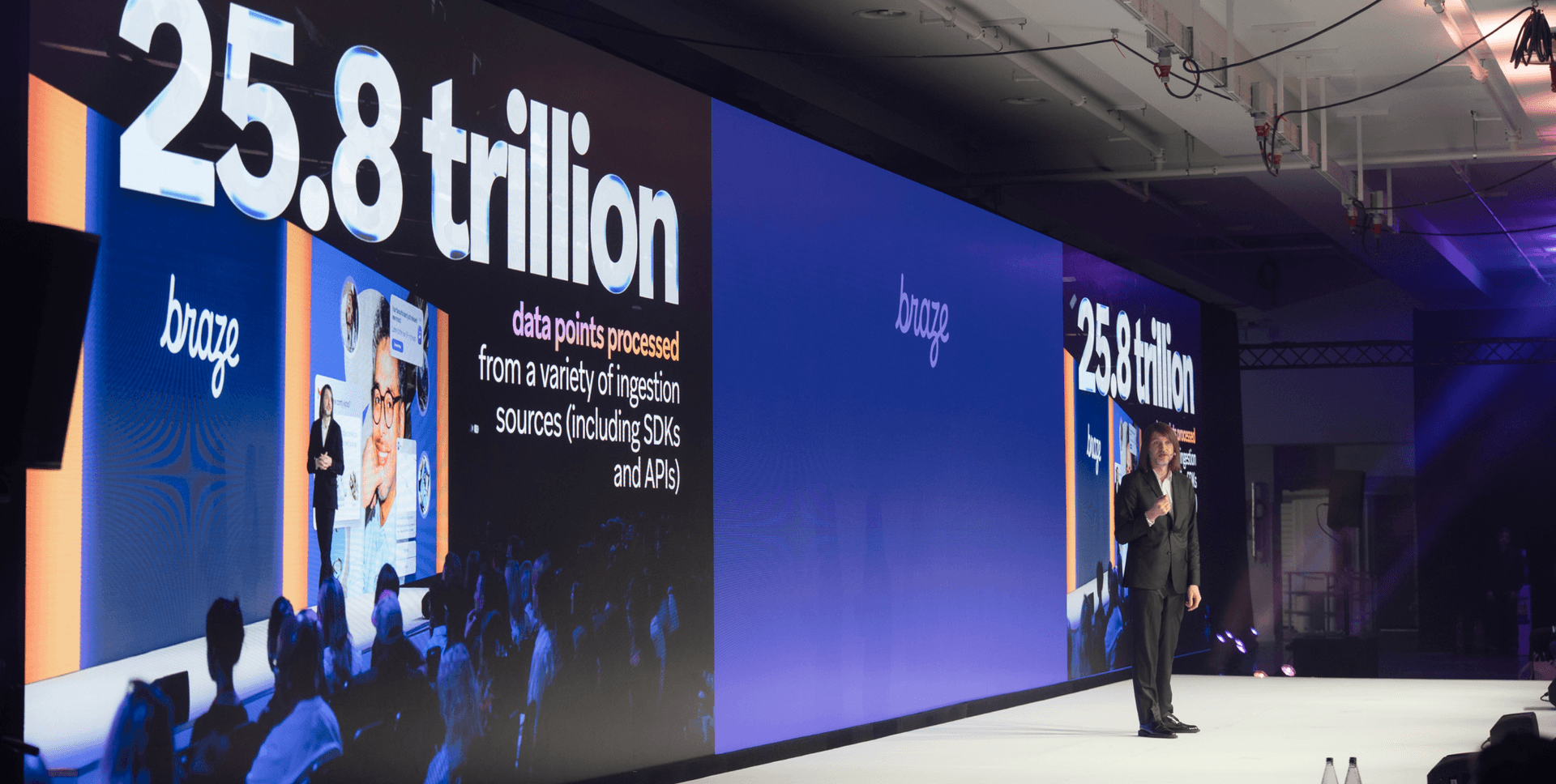
This rich data context powers composable intelligence, embedded with tacit knowledge and driven by first-party data. These agentic units of intelligence enable rich, two-way interactions that create reciprocal value—delivering relevance to customers and, in return, rewarding brands with greater loyalty and attention. In a landscape cluttered with AI-generated content, brands that harness the power of first-party data stand out by offering personalized and meaningful experiences.
Conclusion
As we look to the future, the fusion of advanced tools and human creativity promises to create marketing magic. Just as musicians mastered new tools to redefine their craft, the best marketers of the AI age will harness technology to craft new, memorable experiences for their customers.
By focusing on context and outcomes, brands can build lasting connections with customers. Let's embrace this AI frontier with creativity and purpose, crafting memorable campaigns that stand the test of time.
Related Tags
Be Absolutely Engaging.™
Sign up for regular updates from Braze.