Key insights from Grow with Braze Auckland 2026
Published on April 16, 2026/Last edited on April 16, 2026/10 min read

Team Braze
BrazeContents
How New Zealand’s leading brands are using AI to deepen loyalty, anticipate needs, and prove the impact of human connection.
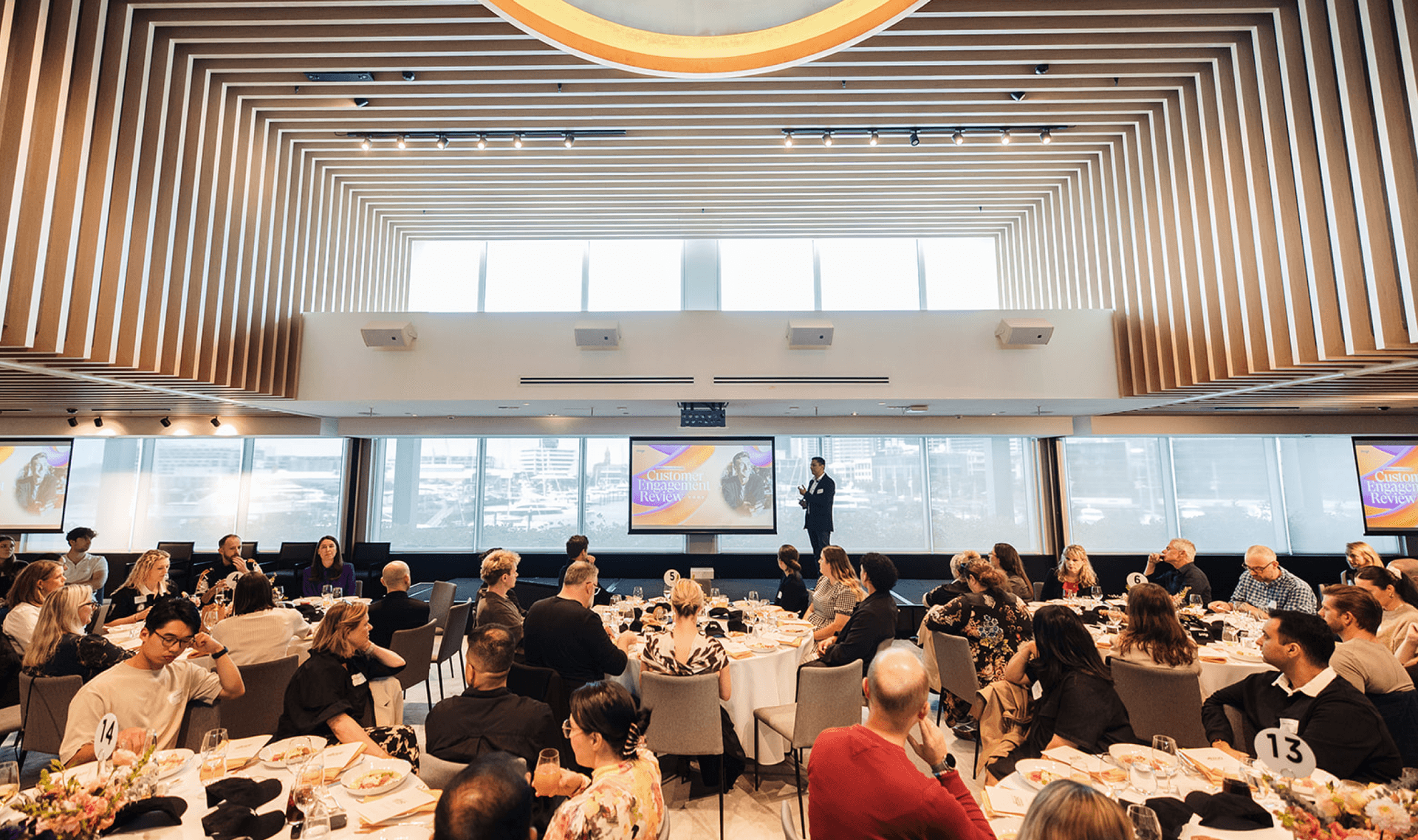
Our Grow with Braze Auckland 2026 event brought together over 120 marketing, CRM, data, and customer experience leaders at the Park Hyatt, Auckland. The afternoon was built around a single conviction: AI is the connection catalyst. Not a replacement for human relationships, but the engine that makes them possible at scale.
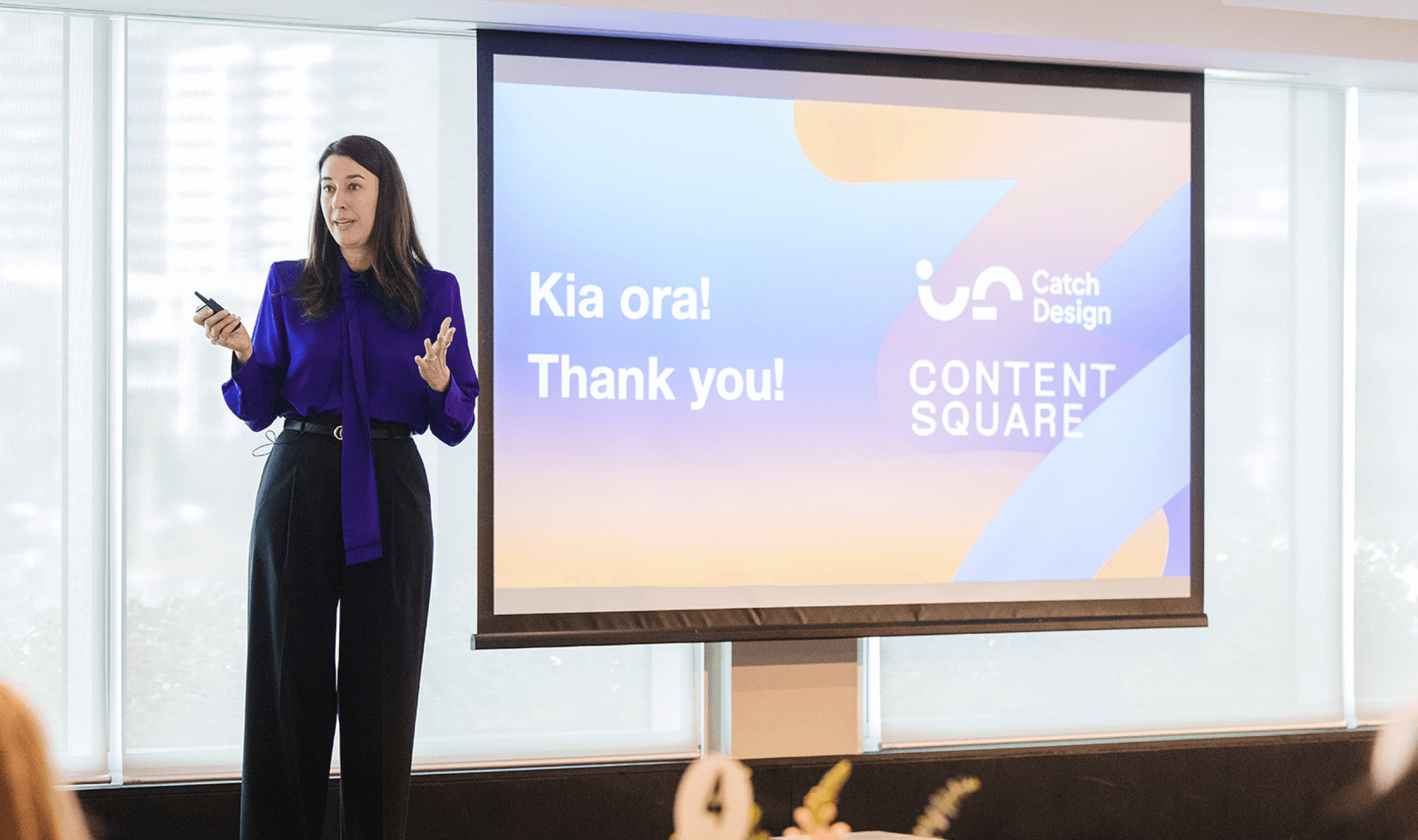
Silvana Tagand, Area Vice President of Sales for ANZ at Braze, welcomed attendees as the event's host, setting the tone for what followed. Now in its third year in New Zealand, she noted, the event continues to grow in ambition and community. Her ask of every person in the room was simple: Leave having made at least one new connection, because that connection could be the start of something amazing.
Across four sessions, New Zealand’s leading brands showed what that conviction looks like in practice: From rebuilding fan engagement foundations at New Zealand Rugby, to running AI-native marketing workflows at Trade Me, to earning loyalty one real-time moment at a time across skiing, fintech, and pet care.
Setting the scene: What customer engagement looks like in 2026
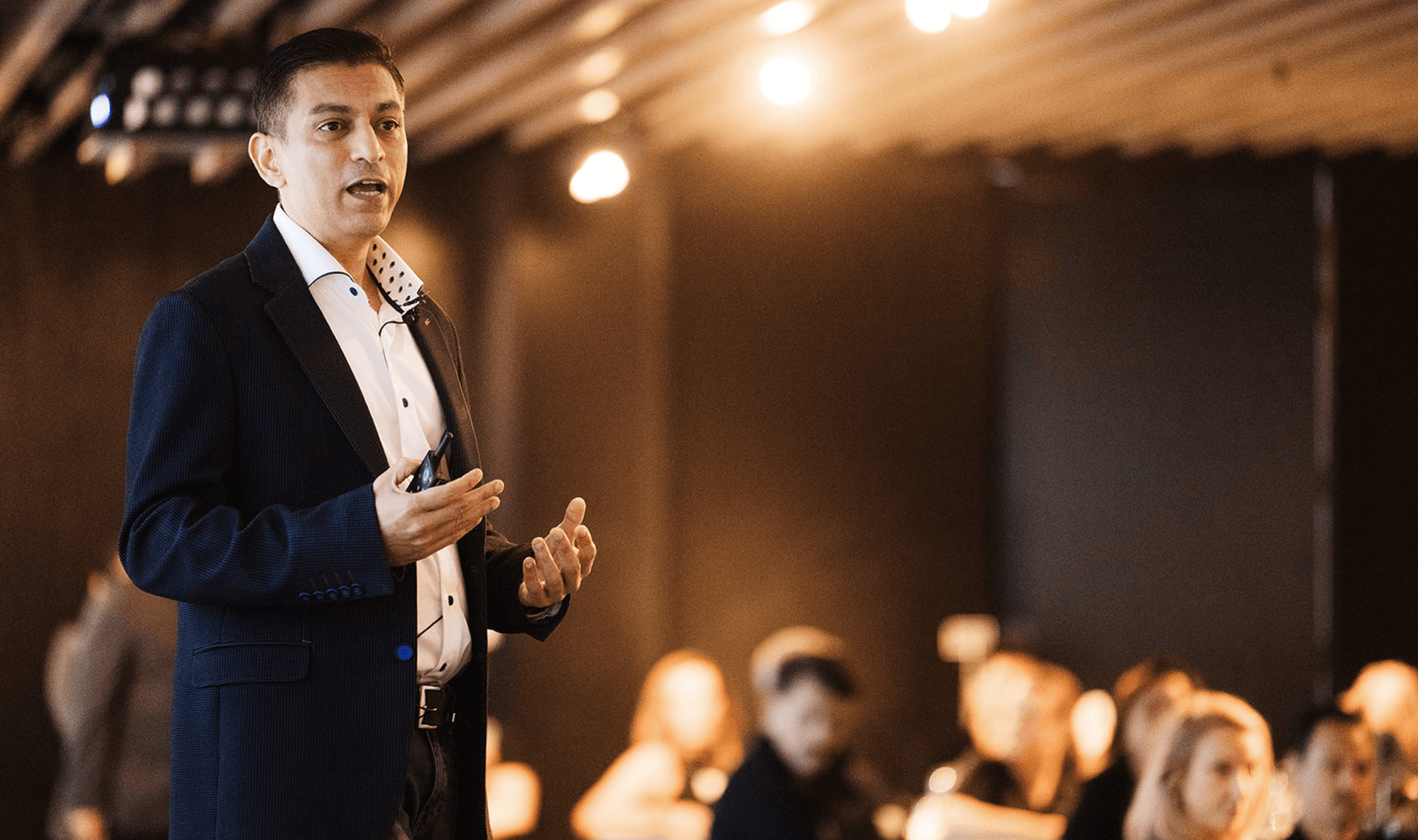
Shahid Nizami, Vice President of Sales for APAC and GCC at Braze, opened the afternoon by sharing findings from the newly released 2026 ANZ Customer Engagement Review, based on a survey of 200 senior marketing leaders across the region. His headline observation: 2026 is about balance. AI is giving marketers unprecedented speed and scale, but consumers still want experiences that feel human. The brands winning right now are the ones figuring out how to deliver both.
He outlined three trends shaping the ANZ landscape:
- Data hoarders anonymous
- Trust or bust
- The revenue rollercoaster
The first, Data hoarders anonymous, highlights a clear paradox: While 98% of ANZ marketing leaders say AI helps them understand customers more accurately, only 34% are using real-time data to assemble content at the moment of engagement. The insight exists, but activation is lagging, largely due to fragmented data and delayed customer views.
The second trend, Trust or bust, focuses on AI intermediation. While 68% of ANZ leaders say AI agents are weakening direct customer relationships, only 10% of consumers would allow AI to interact with brands on their behalf. Consumers are not rejecting AI, but they still want control, which means the window to build direct trust is still open.
The third trend, The revenue rollercoaster, reflects an optimism gap. ANZ marketers are the most confident globally about budget growth, yet fewer are exceeding revenue targets compared to the global average. The takeaway: Growth only comes when AI-driven efficiency is reinvested into better experiences and smarter engagement.
Shahid closed with a look at Braze’s 2026 product roadmap, focused on practical AI, real-time data, cross-channel experiences, scalable creativity, and global reliability, reinforcing Braze’s continued investment in innovation across AI, orchestration, channels, and infrastructure.
● ANTICIPATING NEEDS, ORCHESTRATING JOURNEYS
New Zealand Rugby: From fan records to fan relationships
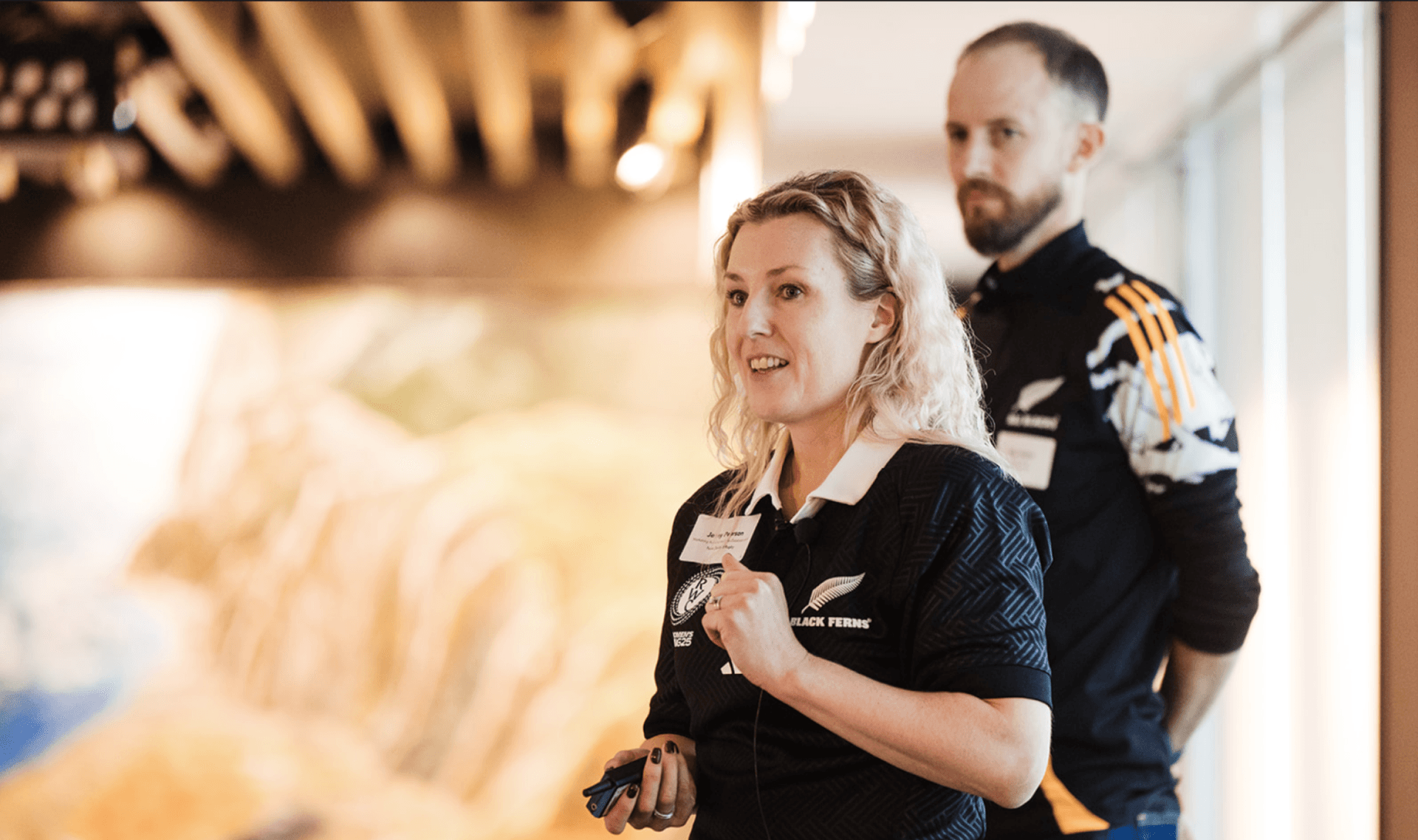
Toby Hunter, Head of Fan Systems, and Jenny Pearson, Marketing Automation and Fan Database Lead at New Zealand Rugby, opened with a question worth sitting with: What does it actually mean to know a fan? For NZ Rugby, fans are supporters, members, viewers, buyers, and advocates all at once. The emotional stakes are high, the commercial opportunity is real, but the data infrastructure they inherited was not built for either.
"The more useful concept for us is fan addressability: How well we actually know a fan, how well we can reach them, and how well we can serve them over time."
Data sat in silos across more than 20 sources including ticketing, merchandise, the streaming platform NZR+, and digital interactions. Segmentation was hard. Journey orchestration was harder. The legacy setup also carried real commercial pressure, with overages running at roughly 60% above estimated contract costs early on. NZ Rugby ran a structured platform evaluation involving Super Rugby clubs alongside their own team, and selected Braze for its ability to support event-based engagement, work across anonymous and known user states, and connect into a broader data ecosystem.
Just weeks out from go-live, the early impact was already visible: real-time anonymous user tracking unlocked, segmentation that previously took hours now done in minutes, and the team moving from campaign-led thinking to journey-led thinking. The next era of fan engagement at NZ Rugby is about moving from broadcasting at fans to building relationships around them.
● EARNING TRUST, BUILDING LOYALTY
NZSki, Zip Co, and Animates Vetcare: Three ways to earn the right to a relationship
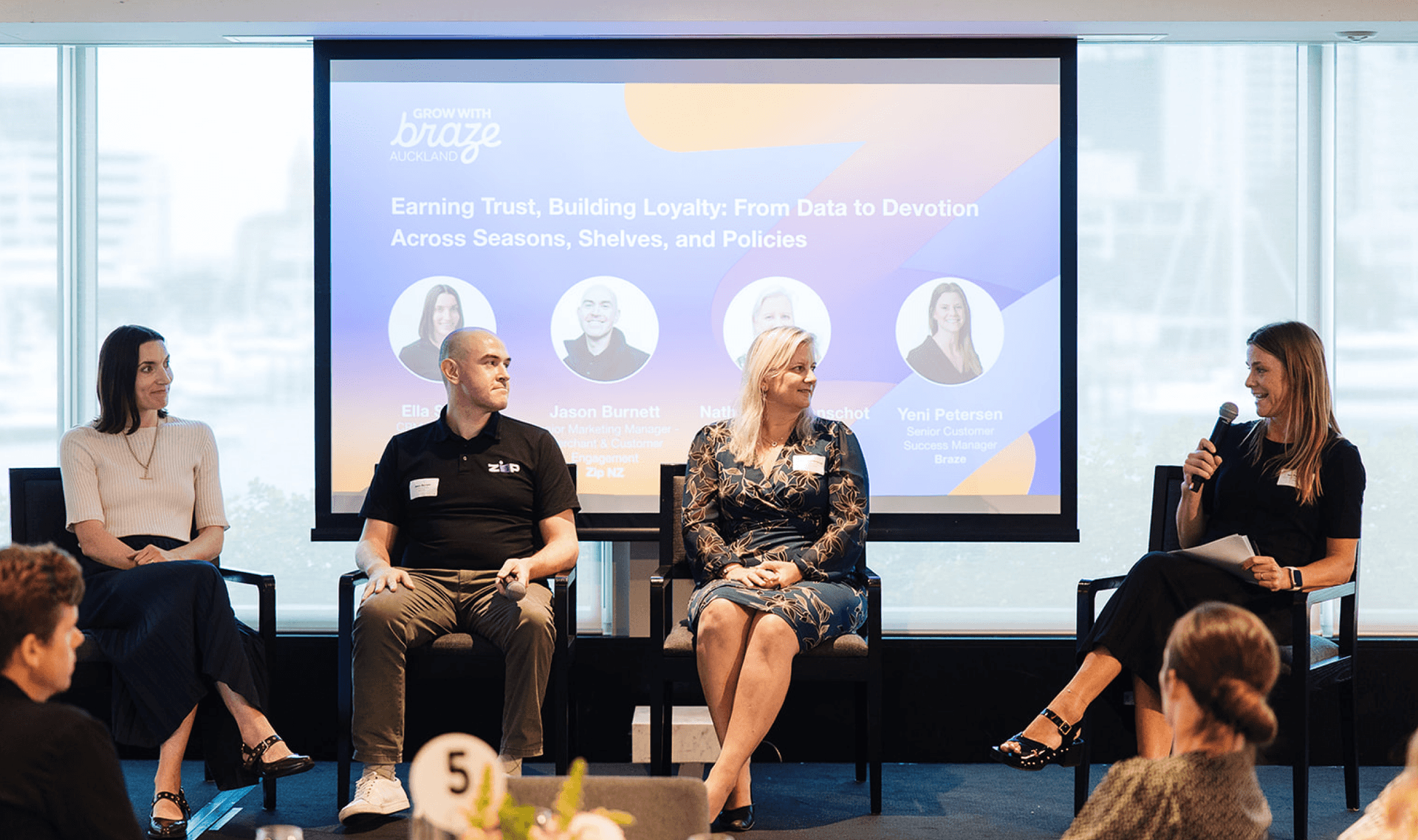
Moderated by Yeni Petersen, Senior Customer Success Manager from Braze, the panel brought together three brands with very different purchase rhythms and emotional stakes, and surfaced a consistent thread: The brands that build lasting loyalty are the ones that show customers the value of sharing data before they ask for it.
Ella Spittle from NZSki described how a short ski season makes every touchpoint count. Pre-arrival communications earn first-visit trust. Post-visit surveys show the brand is listening. And the Spring Shred Challenge, which used chairlift scan data to trigger real-time reward messages on-mountain, delivered a 53% increase in visits from season pass holders and an 8% lift in retention, just six months after onboarding to Braze.
Jason Burnett from Zip Co framed trust as a product feature in a BNPL category that has faced real consumer scepticism. Their biggest New Zealand campaign, 'Zip Your Way to $10K', combined low-barrier entry mechanics, behavior-based rewards, and AI-personalized merchant boost days to drive double-digit growth in engagement and merchant discovery, growing transactions year-on-year. It was built by a marketer, a designer, and Braze.
"Remove the noise by providing genuine value at every touchpoint through relevance and personalization."
Nathalie Moolenschot from Animates Vetcare NZ challenged the default loyalty mechanic: Discounts make customers loyal to the price, not the brand. Animates focuses instead on reminding customers of the value of shopping there, using inferred behavioral signals to adapt journeys as pets move through life stages, and measuring loyalty through category penetration rather than just frequency. Customers who shop across nutrition, health, and services consistently show higher retention and lifetime value.
● HUMANISING CONVERSATIONS, PROVING IMPACT
Trade Me: AI adoption is a culture problem, not a technology one
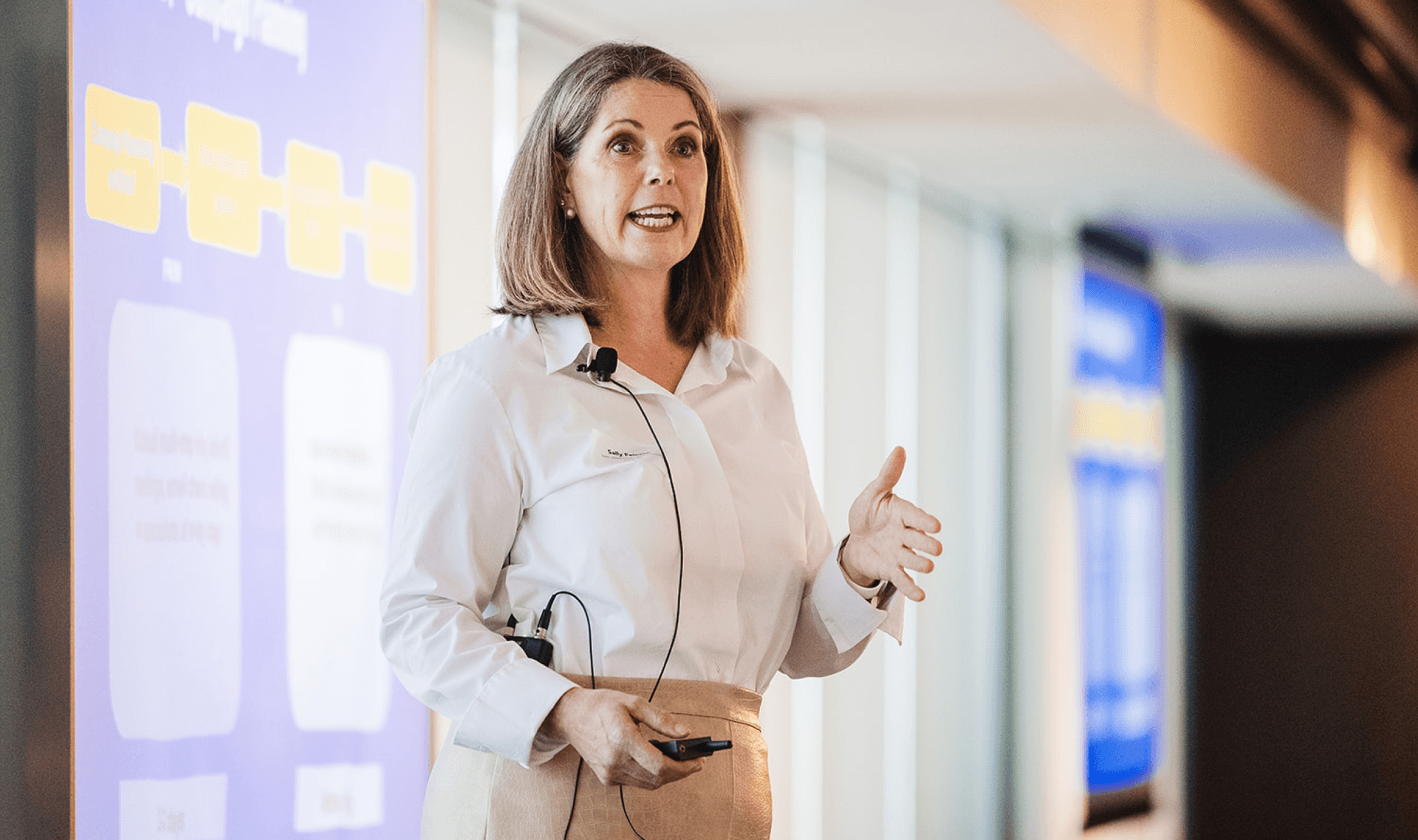
Sally Feinson, who leads Sales, Marketing, and Customer Support for Trade Me's Marketplace, opened with a story about a checkbook. The point was simple: We hold onto familiar processes not because they are better, but because they are familiar. AI, she argued, is not a technology rollout. It is a change management process.
"AI doesn't replace the team. It removes the friction and toil that was slowing the team down."
When Trade Me gained early, widespread access to AI tools, the biggest barrier was not the technology. It was fear: Of roles changing, of looking foolish while figuring it out. Leadership's response was to build psychological safety through three things: confidence, giving the team actual time to learn; permission, creating a culture where failing and laughing at it was just as celebrated as winning; and goals, making AI a core part of roles rather than a side project. A full-day session with PwC, weekly drop-in rituals, and Exec showcases gave the team the space to learn together.
The results show what happens when that culture takes hold. A chain of specialized AI agents now handles campaign planning and briefing, cutting what once took two to three days down to under one. AI-assisted development via Claude Code has reduced deterministic data model turnaround from a week to under two days, and predictive models from six to eight weeks down to around two weeks. Campaign builds in Braze that previously required senior technical specialists now take one to two days using the BrazeAI Operator™ liquid logic capability. The team is running more optimization experiments per cycle than ever before.
Sally's practical advice for teams beginning their own journey: Map your current toil before you touch a single AI tool, keep agents small and specialized so each has the right context for its job, always keep a human in the loop, and always ask whether AI is improving quality in a measurable way.
Braze Honours: Sharesies recognized for customer impact and growth
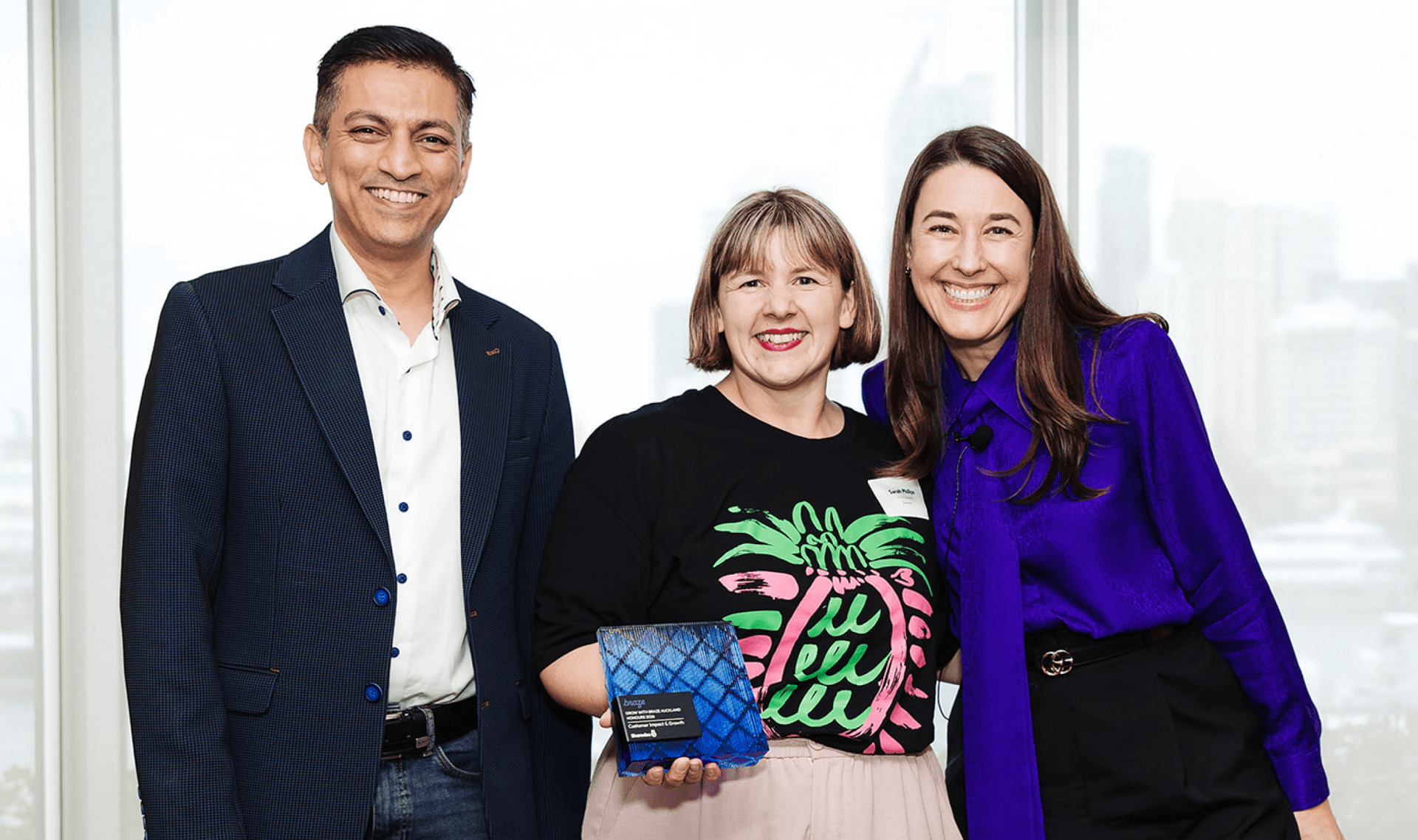
The afternoon closed with the inaugural Braze Honours, a programme recognising outstanding customer engagement work across the APAC community. Nominations were assessed by an independent panel of five judges across three dimensions: strategic clarity and ambition, measurable business impact, and data-driven optimization. The standard was high across all submissions, but one entry stood apart for the sophistication of its thinking, the rigour of its experimentation culture, and the clarity with which it connected Braze to real business outcomes.
Sharesies, the New Zealand investment platform with nearly 800,000 customers across New Zealand and Australia, took out the Customer Impact and Growth Honour, scoring 13 out of 15 across the judging panel. The results that earned that recognition are striking: a 30% uplift in conversion behavior from targeted email personalization; a cross-sell conversion rate that doubled from 1.5% to 3.5% by adding investor stories as social proof; a 7% incremental conversion rate from their cross-sell multichannel campaign, achieved by pairing Content Cards with email to consistently outperform single-channel efforts; and a KiwiSaver incentive campaign that lifted conversion from 1.6% to 4.3%.
Behind every number is a test-and-learn culture that treats each experiment as input for the next one. The panel described the submission as best-in-class for experimentation culture and the strength of its measurable outcomes. Sarah Phillips, Lifecycle Marketing Manager at Sharesies, accepted the award for her team.
Four takeaways for New Zealand marketers
- Addressability beats volume. Going from database thinking to relationship thinking is the prerequisite for everything else. Knowing how well you can reach and serve a customer matters more than how many records you hold.
- Trust is earned before it is activated. From NZSki's pre-arrival onboarding to Zip's transparency-first BNPL model, every panelist described consent as something you demonstrate the value of, not something you assume.
- AI unlocks scale, culture unlocks AI. Trade Me's playbook is replicable. The teams winning with AI are the ones where psychological safety exists, failures are shared openly, and experimentation is built into the rhythm of the role.
- Prove impact on metrics that matter. Opens and clicks are diagnostics. Retention, category penetration, incremental transactions, and conversation quality are the metrics that tell a board whether marketing-driven engagement is actually changing behavior.
Growth starts with connection
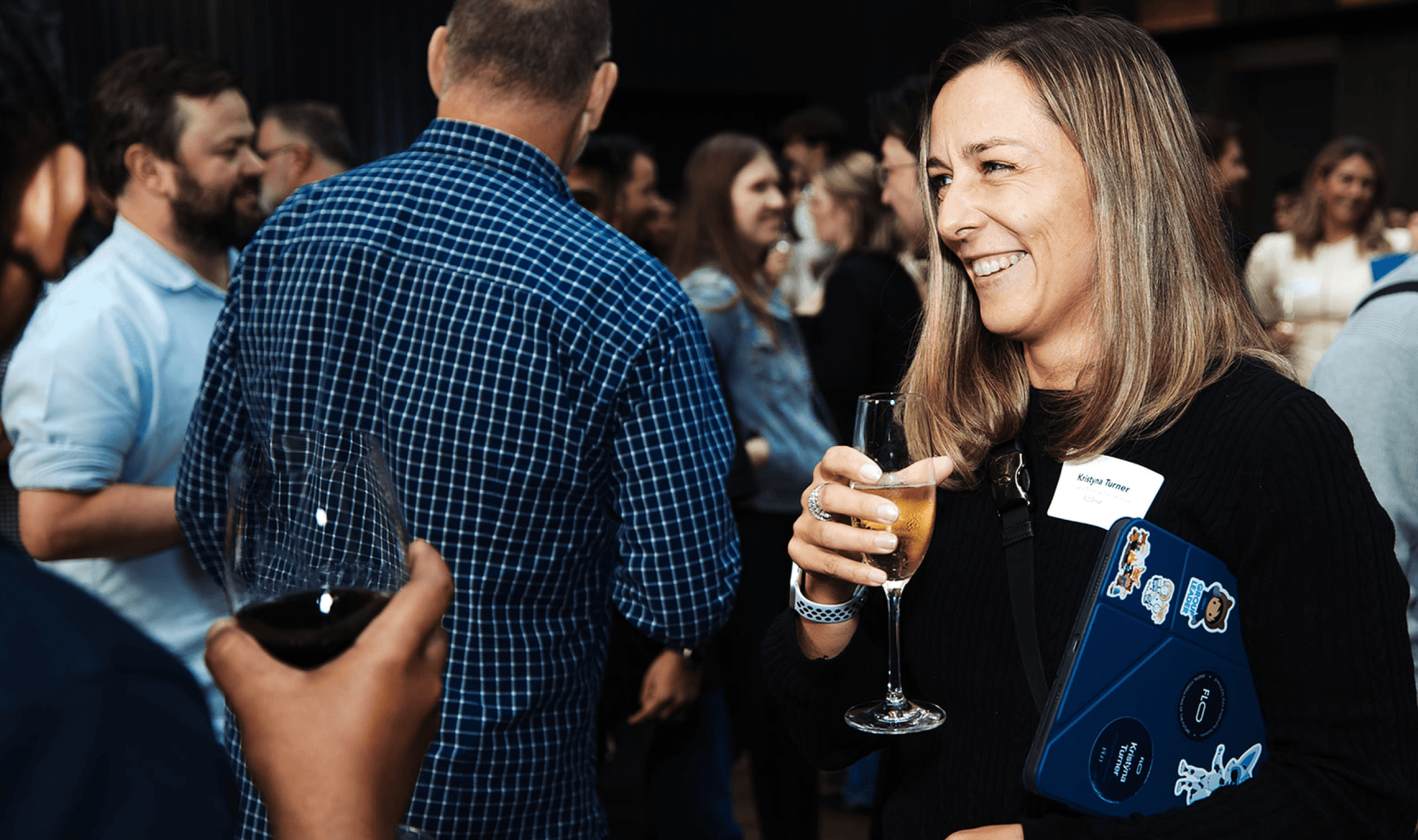
As the afternoon moved from the Harbour Room to the Ceremonial Gardens, the conversations carried on. What lingered was not any single campaign result, but the consistency of the conviction underneath all of them: genuine growth comes from genuine understanding.
NZ Rugby is rebuilding its foundations to anticipate what fans need before they have to ask. Trade Me is removing toil so marketers can focus on the thinking that matters. Zip, NZSki, and Animates are each finding their own way to earn the right to a long-term relationship. And Sharesies is proving, number by number, that a personalized connection is worth more than a broadcast campaign.
AI is the catalyst. The relationship is the strategy. And New Zealand is very much part of writing what comes next.
Want to go deeper on the trends shaping customer engagement in 2026?
Download the 2026 ANZ Customer Engagement Review for exclusive case studies, data, and strategic frameworks shaping the next era of brand-customer relationships.
Related Tags
Be Absolutely Engaging.™
Sign up for regular updates from Braze.
Related Content
 Article3 min read
From "sent" to "seen": Introducing Email Deliverability Essentials
April 14, 2026 Article3 min read
Why VPPA forces media brands to choose between compliance and relevance, and how to avoid that tradeoff
April 13, 2026 Article11 min read
Customer engagement in financial services: real-world examples that work
April 09, 2026