The ROI of AI: How CMOs can showcase tangible value to the C-Suite
Published on January 26, 2026/Last edited on February 26, 2026/4 min read


Sally Wills
Senior Content Strategy Manager, BrazeSummary
AI ROI in marketing is demonstrated by tying AI initiatives to defined objectives like customer engagement, promotional spend optimization, and lead conversion, then tracking brand-specific KPIs. AI systems analyze behavioral data to personalize campaigns, while AI services teams customize models, monitor performance, and iterate to align outcomes with C-suite growth and revenue goals.
Show moreShow less
The buzz around artificial intelligence (AI) is deafening. Yet, within that, a stark reality emerges: Only 15% of CMOs are deemed “AI-savvy” by their own CEOs, according to the latest Gartner data. This statistic is not just a number; it’s a clarion call for marketers, especially those in B2C companies, to step up their game. As we navigate this brave new world, the challenge lies not in adopting AI for the sake of it, but in demonstrating its tangible return on investment (ROI) to the C-suite.
The boardroom is not a place for vague promises and lofty ideals. CEOs want to see the numbers, the metrics that prove AI is not just a shiny new toy, but a powerful tool driving real business outcomes.
So, how can CMOs confidently articulate the value of AI initiatives? Here’s a roadmap to help you navigate this complex terrain without getting lost in the weeds.
1. Define clear objectives
Before diving into AI, it’s crucial to establish clear objectives. What specific problems are you trying to solve? Whether it’s enhancing customer engagement, optimizing promotional spend, or improving lead conversion rates, having well-defined goals will serve as your North Star. This clarity will not only guide your AI initiatives but also provide a benchmark against which success can be measured.
2. Leverage data-driven insights
AI thrives on data, and so should your marketing strategy. Utilize AI tools to analyze customer behavior, preferences, and trends. By harnessing these insights, you can create personalized marketing campaigns that resonate with your audience. For instance, if AI reveals that a particular segment responds well to targeted social media ads, you can allocate resources accordingly. The result? Higher engagement rates and, ultimately, increased revenue.
3. Measure key performance indicators (KPIs)
AI has promised CMOs the world, but if it cannot affect the bottom line, you may have trouble justifying your new investments. ROI starts with defining, then optimizing, key performance indicators critical for your brand’s growth. The metrics that enhance the bottom line of a financial services institution will be entirely different from a retailer or a quick service restaurant.
AI solutions should be entirely customizable to the specific ROI needs of your brand, while taking into consideration the unique data and guardrails instrumental to fostering and maintaining deep customer relationships. This can only happen when brands and their AI solutions are working in tandem, guided by AI services teams that act as consultants who develop deep knowledge of your needs, build AI solutions focused on ROI, and monitor results with the aim of constantly optimizing AI models to meet your needs.
4. Showcase case studies
Nothing speaks louder than success stories. Highlight case studies from your industry where AI has driven significant results. These examples can serve as powerful testimonials to the efficacy of AI, and we have a whole repository of success stories to browse for inspiration here.
5. Foster a culture of continuous learning
AI is not a one-and-done initiative; it requires ongoing learning and adaptation. Encourage your team to stay abreast of the latest AI trends and technologies. By fostering a culture of continuous learning, you’ll not only enhance your team’s skills but also position your organization as a forward-thinking leader in your industry.
6. Communicate effectively with the C-Suite
CEOs are skeptical. They’re concerned CMOs aren’t quick enough to embrace AI solutions, and they’re saying it loudly. That puts many CMOs in a difficult situation. While many marketers already embrace AI to build deeper relationships with customers, offer creative customer service solutions, and enhance the efficacy of their marketing strategies, they may be struggling to communicate their success to their peers in the c-suite. By highlighting AI initiatives that alight with growth and the company’s strategic goals, CMOs can send a loud message that marketers are not only ahead of the curve, they’re leveraging AI to increase the bottom line.
Final thoughts: Embrace the AI revolution
CMOs stand at the precipice of a revolution. AI has the potential to transform our marketing strategies and drive unprecedented value. However, to truly harness its power, we must go beyond mere adoption. By defining clear objectives, leveraging data-driven insights, measuring KPIs, showcasing success stories, fostering a culture of learning, and communicating effectively with the C-suite, we can confidently demonstrate the tangible ROI of AI initiatives.
In a world where only 15% of CMOs are considered “AI-savvy,” let’s strive to be part of the elite few who not only embrace AI but also showcase its undeniable value. After all, in the eyes of the CEO, it’s not just about “doing AI”; it’s about delivering results that matter. So, let’s roll up our sleeves and get to work—because the future of marketing is not just bright; it’s positively glowing with potential.
Related Tags
Be Absolutely Engaging.™
Sign up for regular updates from Braze.
Related Content
 Article5 min read
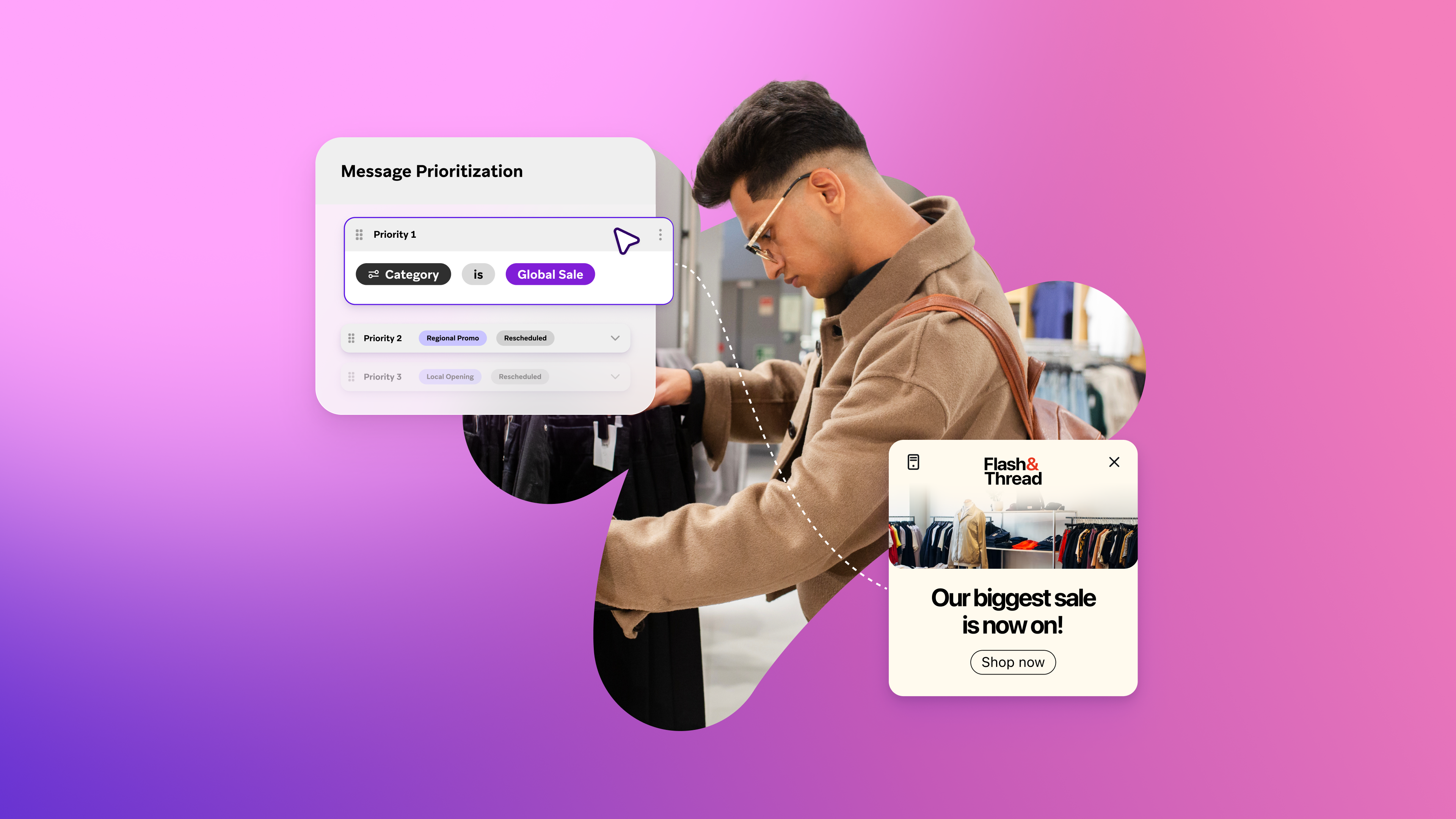
Message Prioritization: Make your most important messages win
October 20, 2026 Article37 min read
SMS marketing examples: Use cases for B2C brands, by industry
October 19, 2026 Article11 min read
BrazeAI Operator™ Use Cases: How Marketers Launch Campaigns, Build Segments, And QA In Minutes
October 19, 2026